

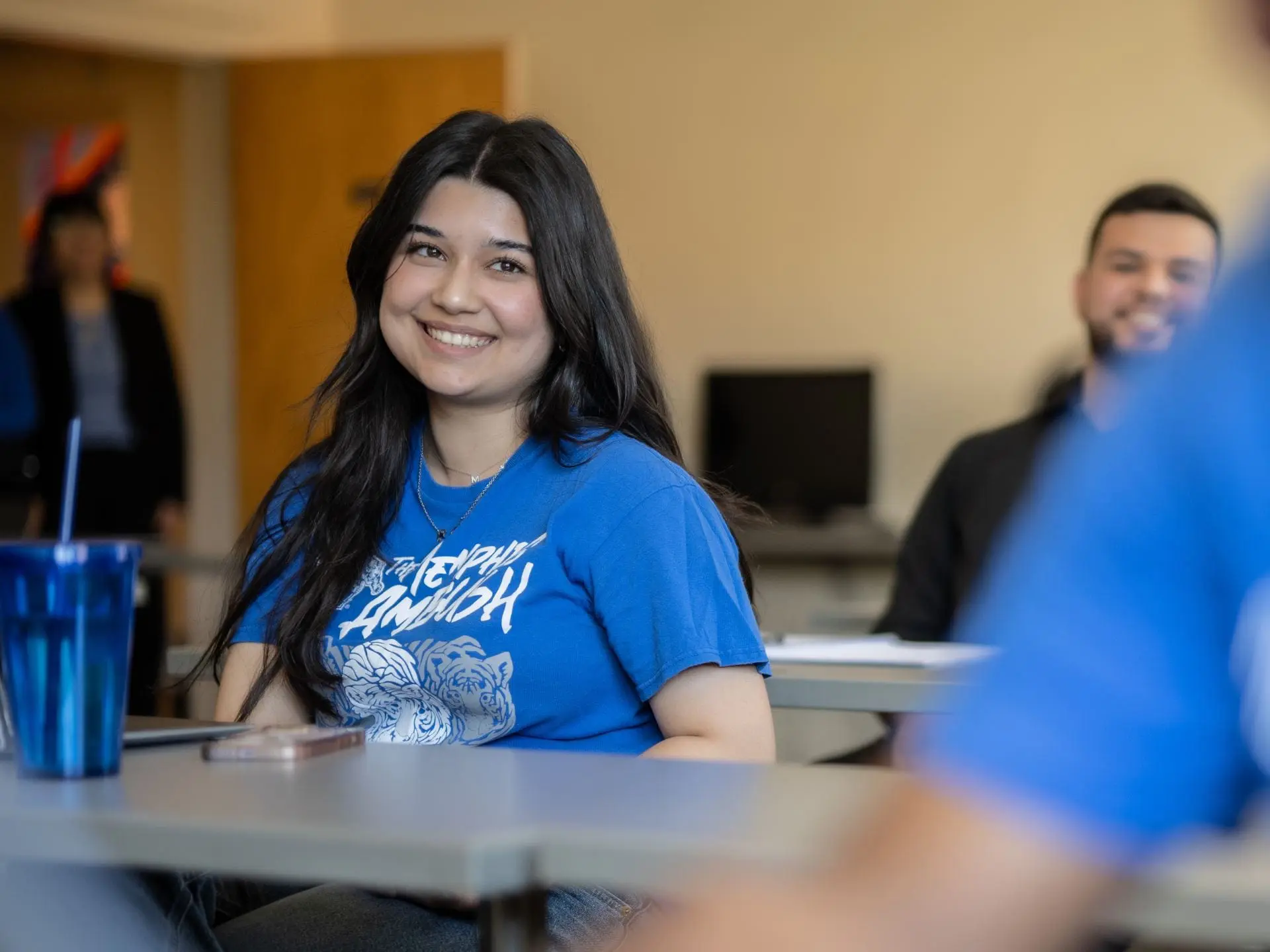
Student Spotlight | Mira Umarova
– College of Arts and Sciences, Helen Hardin Honors College –
When I think about where my passion for science began, I always come back to ants.
Since childhood, I’ve had what I can only describe as a “crazy love” for them. I would watch their colonies for hours, fascinated by their organization and communication.
Years later, when I was given the chance to actually study them in the field, it felt like everything had come full circle.
At the end of my sophomore year, I reached out to Dr. Philip Kohlmeier, a new professor in the biology department whose research focused on social insects.
To my surprise, he quickly invited me to join him on a summer research trip to Albany, N.Y. I had never been on a research trip before, but I said yes without hesitation.
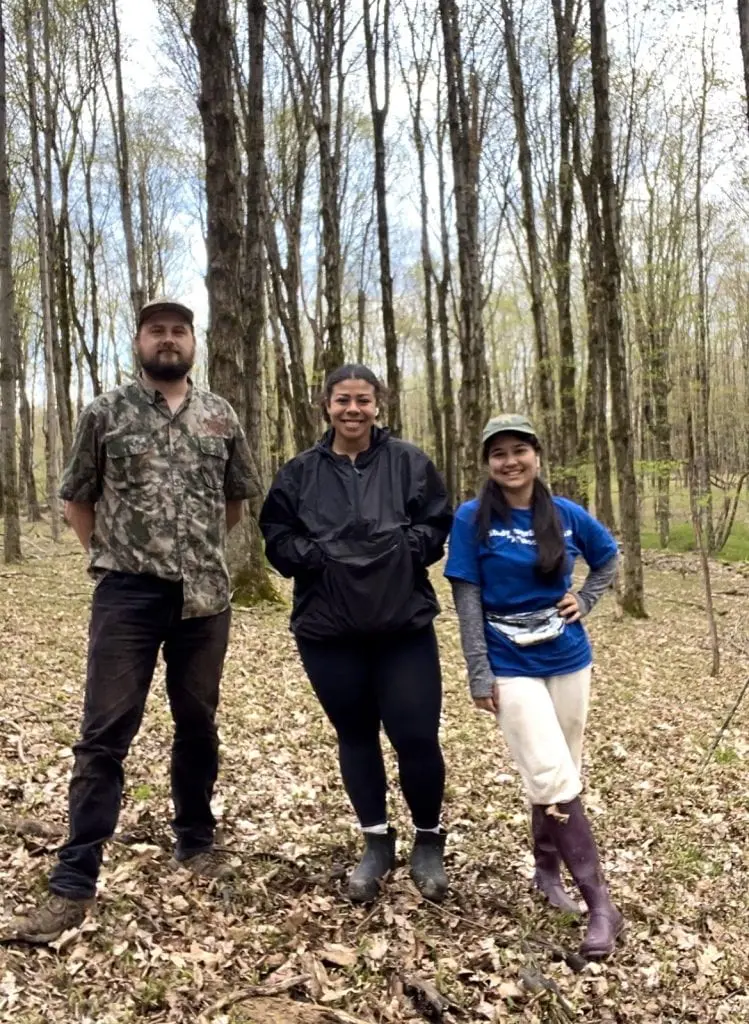
That summer in 2023, I spent a week in the forests of upstate New York collecting ants. It was hot, muddy and crawling with bugs — and I loved every minute of it.
I peppered Dr. Kohlmeier with endless questions, and he patiently answered them all. By the end of the trip, I knew that this was what I wanted to do: dive into fieldwork, study live animals and uncover how they adapt and communicate.
That week in the woods didn’t just affirm my love for ants; it solidified my passion for biology.
My Biology Origin Story
My love for biology has always been about making connections.
At 11 years old, I remember reading about plants and being amazed at how the work of a single cell could scale up to entire organisms, ecosystems and beyond. Biology wasn’t just a subject to me — it was a way of seeing the world.
In high school in Tashkent, Uzbekistan, I competed in district and capital-wide biology competitions. Those experiences, along with the encouragement of my biology teacher who believed in my potential, pushed me to aim higher.
At 15, I was accepted into a specialized medical high school where I began learning biology in English. That was an important step because I already knew I wanted to study abroad.
When it came time to choose a university, Memphis checked all the boxes. The city was vibrant yet manageable, the climate reminded me of home and the Tigers mascot made me smile.
I took a leap of faith, packed my bags and moved halfway across the world to pursue my dream.
Finding My Footing
Adjusting to life in Memphis wasn’t easy at first. My English was strong, but my Russian accent was heavy, and I often felt frustrated when I couldn’t express myself the way I wanted.
Slowly, I let go of worrying about my accent and focused instead on building connections and opportunities.
One turning point came during a biology course where faculty members introduced their research. That’s how I first met Dr. Duane McKenna, who was working on evolutionary genetics.
I joined his lab and spent a semester cataloging beetle genotypes. It was my first taste of research, and though I enjoyed it, I realized I wanted to work with live animals instead of preserved specimens.
That led me to Dr. Kohlmeier and my summer with the ants. From there, my research experiences kept expanding. In the fall, I worked on a cold adaptation project with fruit flies, studying how female flies could induce cold tolerance in their offspring depending on their environment.
The following spring, I joined a chemical communication project, which resulted in my very first scientific publication.
Seeing my name listed as a co-author was one of the proudest moments of my academic career.
Life in the Honors College
I joined the Helen Hardin Honors College later than I wish I had — at the end of my sophomore year. But it has since become one of the most important parts of my college experience. The opportunities I’ve received through the program have shaped me both academically and personally.
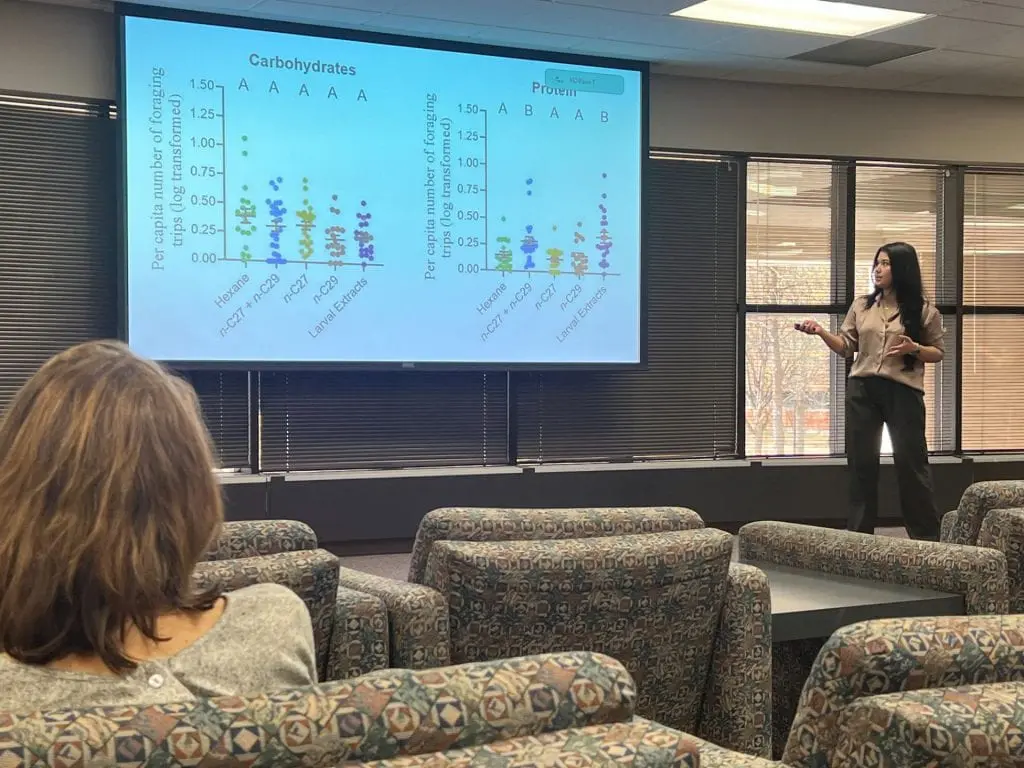
Through the Honors Fellowship, I was able to fund my research and travel to conferences in Nashville, Tenn., and Pittsburgh, Pa. Presenting my work, networking with other young scientists and learning from experienced researchers gave me the confidence to see myself as part of the scientific community.
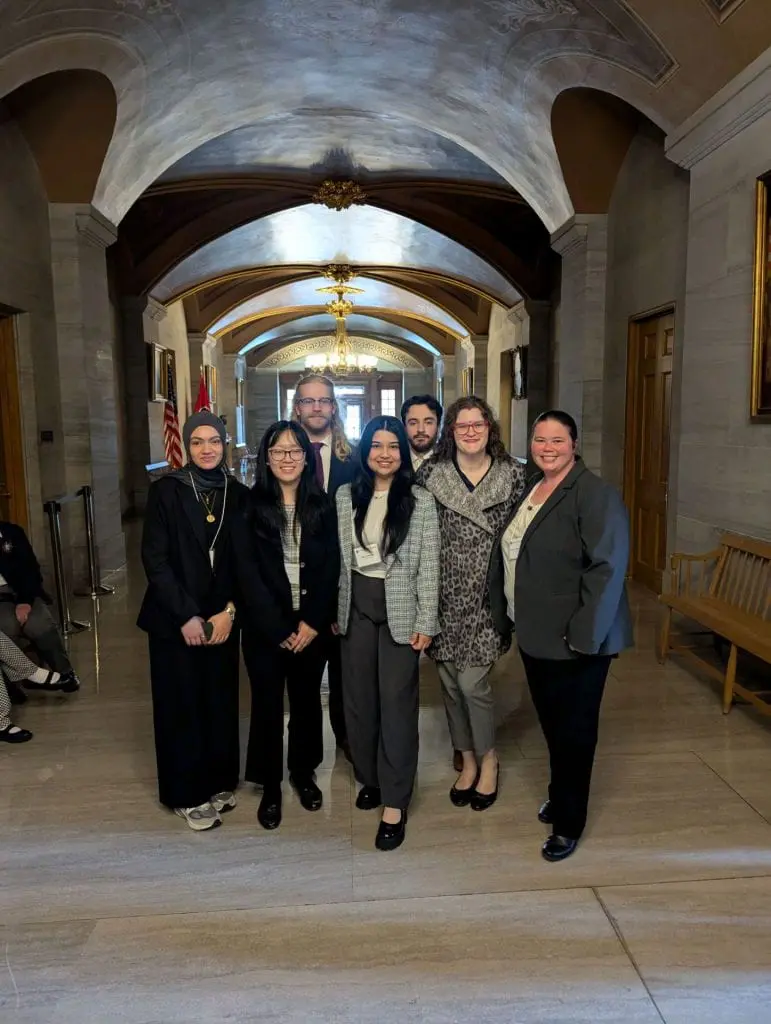
Now, as an Honors Ambassador, I want to help other students see the benefits of joining early. I encourage them to take advantage of every resource — advisors, tutors, fellowships — because the support system here is incredible.
I know from experience how transformative the Honors College can be, and I don’t want anyone to miss out.
Looking Ahead
As I enter my final year at the University of Memphis, I can look back and see how far I’ve come — from a girl in Tashkent captivated by biology textbooks to a researcher who has presented at conferences and published her first paper.
My next step is to continue research in neurobiology with Dr. David Freeman, chair of the Department of Biological Sciences, focusing on aggression studies.
Neurobiology fascinates me because of its complexity and its potential to answer questions about diseases like Alzheimer’s and Parkinson’s.
My long-term goal is to contribute to research on neurodegenerative disorders, a field where every discovery can make a profound difference.
The University of Memphis and the Honors College have given me the tools, experiences and community to pursue that goal. I’ve learned resilience, leadership and the value of curiosity.
Wherever my career takes me, I know I’ll carry those lessons — and my love for biology —with me.
I’m proud to call Memphis home and prouder still to always be a Tiger.