

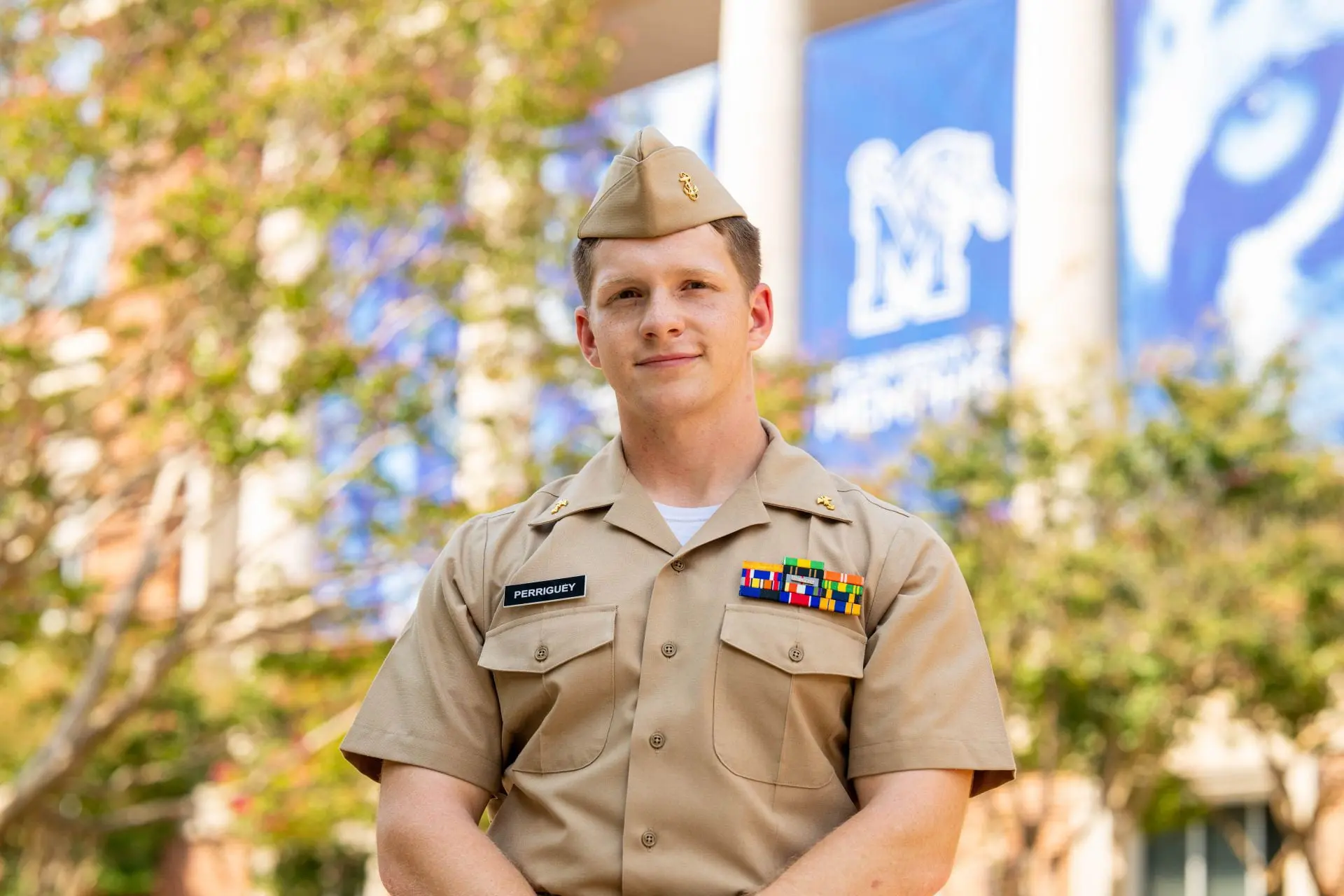
Student Spotlight | Isaac Perriguey
– College of Arts and Sciences, Helen Hardin Honors College –
When I look back on my time at the University of Memphis, I don’t always think first about the classroom.
Instead, I picture myself standing in a rec center gym with a handful of students, a borrowed mat and an idea that sounded too ambitious at the time.
We were there to restart the Memphis Wrestling Club.
I’d wrestled for only a couple of years in high school, but the sport had taught me toughness, humility and the value of persevering through difficult things.
Memphis didn’t have a program anymore, so I figured, ‘Why not build one?’
Initially, I had no idea how to reserve space, schedule practices, recruit students or manage finances for a student organization.
I’m naturally a quiet person, so the idea of walking up to strangers at the Student Involvement Fair and telling them why they should join was intimidating. But I cared enough about wrestling, and about giving others the same experience I’d had, that I forced myself out of my comfort zone.
Two years later, we have coaches, a growing roster and a season’s worth of competition under our belt. I’m no longer scheduling every practice myself, but I’m proud to see younger leaders taking the lead.
That same push to step out of my comfort zone is what I’ve found in the Helen Hardin Honors College. Being part of honors meant smaller classes, closer relationships with professors and more chances to take ownership of my education and leadership.
Starting a club from scratch felt like a natural extension of the same lessons: if something doesn’t exist, I can help build it.
“If I had an interest, Memphis allowed me to chase it, all without leaving home.”
Whether it’s a student organization or a research opportunity, the Honors College taught me to see those gaps not as obstacles but as challenges worth tackling.
Finding Direction in Memphis
I didn’t plan to spend my college years in my hometown.
Growing up in Memphis, I always imagined leaving, maybe to a big university out of state. I even put all my energy into applying to the Naval Academy, convinced that it was the path I needed.
When I was denied, Memphis felt like my “backyard college”— a backup plan. I thought I might transfer after a year.

But something shifted during my sophomore year. With encouragement from my Naval ROTC advisors, I started realizing just how much I could do right where I was.
If a program wasn’t offered, I had the opportunity to create it.
If I had an interest, Memphis allowed me to chase it, all without leaving home.
That mindset eventually carried me into everything from tutoring to serving as an honors ambassador.
By then, I’d declared both biology and chemistry as majors, partly because I’d earned a lot of AP and Dual Enrollment credits and partly because I wanted to follow in my mother’s footsteps.
She majored in both subjects during her time in college with hopes of going to medical school, but never pursued it. Carrying that dream forward became personal for me.
I knew from a young age that I wanted to become a doctor. Then I found I could do that in the Navy. After my military career, I plan on practicing family medicine in a rural community.
Every class and lab since then have felt like a step toward something bigger than myself.
The ROTC Brotherhood
ROTC wasn’t my first choice either. In high school, I joined Army JROTC because it seemed like an easy way to skip PE. But I stuck with it, eventually rising to executive officer in the unit.
When the dean of admissions from the Naval Academy visited, he told me I’d be “stupid” not to apply. That comment sparked a fire that I’ve carried ever since.
Here at Memphis, Naval ROTC has been the clearest training ground for leadership I’ve ever had. The program doesn’t hand you opportunities — it demands that you create, plan and execute.
Over time, I’ve managed a wide range of things, from the drill team to finances to the Navy Ball. This year, I serve as midshipman operations officer, coordinating the unit’s schedule directly with our active-duty staff.
It’s a lot of responsibility, but it’s also where I’ve felt the deepest sense of community.
We train together, push each other and support one another on and off the physical training field.
It’s closer to a family than anything else I’ve known.
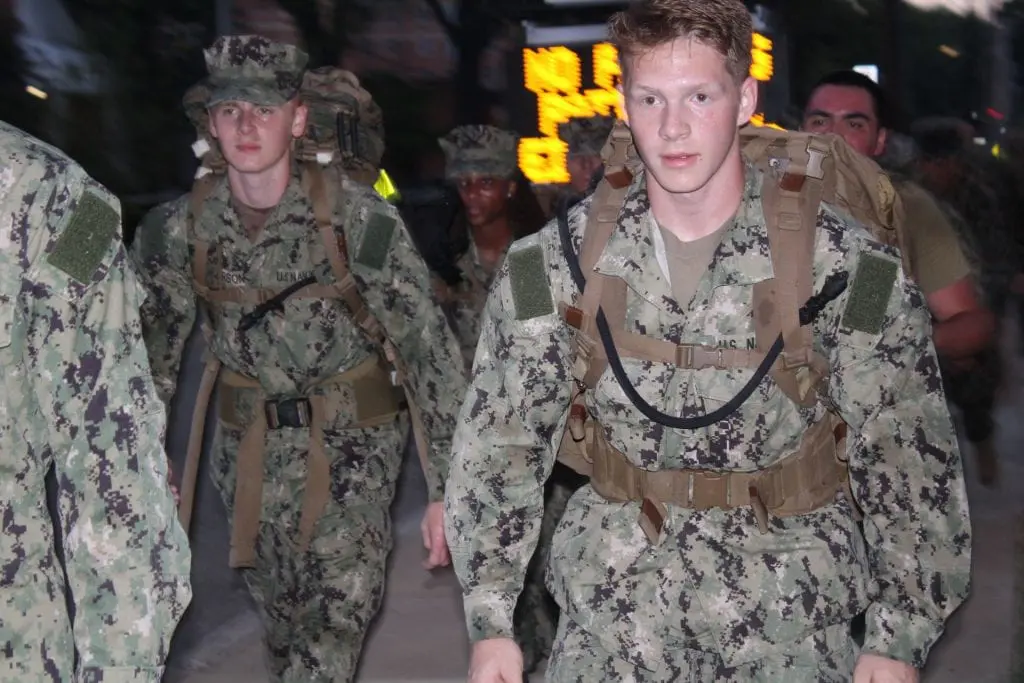
As a child with siblings much older than me, I didn’t grow up with that kind of bond. Now, the men and women beside me in ROTC are my brothers and sisters, and I wouldn’t be who I am without their influence.
They make me better, and I try to do the same for them.
Honors, Ambition and Helping Others
When I received the invitation to join the Helen Hardin Honors College, I accepted it primarily because it was a “why not?” opportunity.
That’s kind of my rule: if something is available, at least try.
Over time, though, the Honors College experience has given me more than a line on my diploma. It’s offered mentors like Dr. Jonathan Holland, who always knew my name and encouraged me to pursue research and leadership roles, and Dr. Melinda Jones, who wants each and every student to succeed through the Honors College.
It’s also given me the chance to become an Honors Ambassador, visiting local high schools — including my own, Central High School — to share what’s possible at Memphis.
While I had found myself helping others passively, that role taught me how much I value helping others find their own path actively.
Whether recruiting for the Honors College, NROTC or just the University itself, I’ve realized that I don’t just want to achieve things personally. I want to open doors for other students.
I’ve always been competitive, but I’m also motivated by seeing other people succeed. It’s why medicine appeals to me and why I keep saying yes to opportunities that let me mentor and coach.
I tell younger students all the time: don’t leave here with regrets.
If there’s an opportunity in front of you, take it. Even if it doesn’t work out, you’ll grow from it.
I learned that lesson myself after being rejected from the Naval Academy, and it has shaped every decision since.
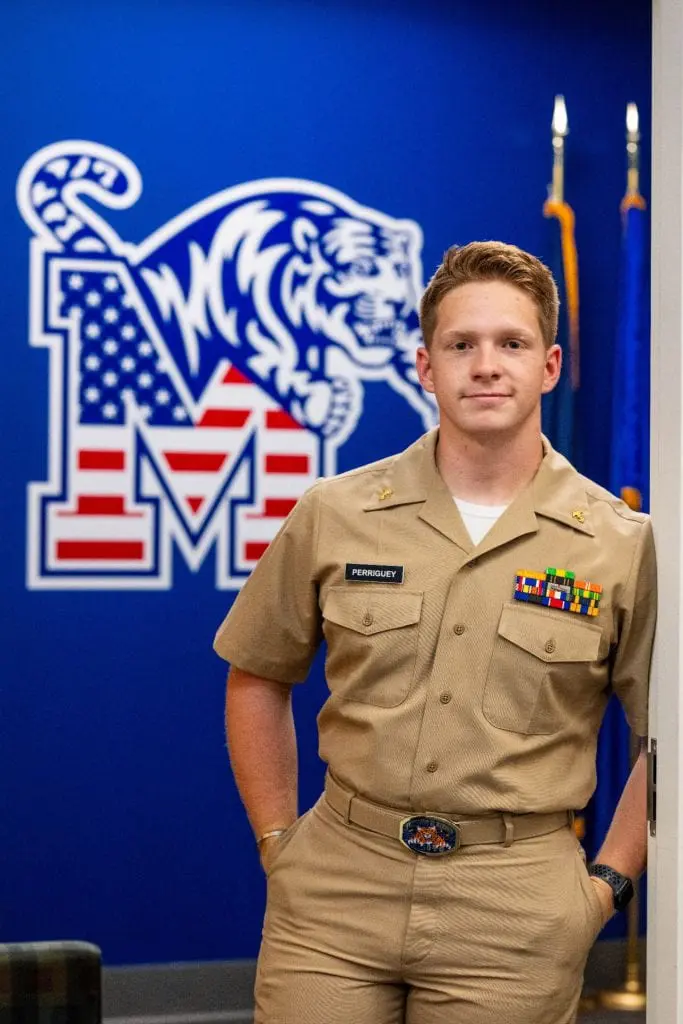
Photo by Matthew A. Smith/The University of Memphis
Looking Ahead
Now, as I enter my final semester, I’m preparing for the next chapter.
In December, I’ll commission as a Naval officer, then graduate the following day. By summer, I’ll report to my first ship — hopefully in Jacksonville, Fla. Then I’d like to deploy with Carrier Strike Group 10. After two or three years there, I’ll reevaluate, as the Navy often demands.
In the long term, I aspire to transition into a career in medicine, ultimately serving as a family physician in uniform.
I also hold an ambition to pursue explosive ordnance disposal and Fleet Marine Forces, both communities that I know will challenge me in ways I find meaningful.
Whatever comes, I know the University of Memphis has prepared me to adapt, to lead and to keep moving forward.
From wrestling mats to chemistry labs, from honors classrooms to ROTC drills, this campus has shaped my perspective on myself and what I am capable of.
When I first arrived, I thought staying in Memphis meant limiting myself.
Now I see it differently. Memphis was never a backup — it was a launchpad.