For many veterans, the hardest transition isn’t deploying to an unfamiliar country or intense basic training; it’s coming home.
After years of routine, structure and shared purpose end, many find themselves in a world that feels both familiar but foreign. College classrooms replace training fields. Professors replace commanding officers. Without the clear sense of duty that once defined every day, civilian life can suddenly feel chaotic.
The University of Memphis is working to make that transition easier. “The shift from military to civilian life can bring doubts, uncertainty and can lead to students not necessarily believing in themselves or feeling out of place,” said Chris Bourque, director of the University of Memphis Veteran and Military Student Services Office (VMSS). “That’s why we’re here. We’re creating a space and opportunity for military-affiliated students to feel normal and understand that they have all the skills and abilities to be extremely successful.”
Bourque knows the experience well. Having served in the Army National Guard for 17 years, he now works to ensure that those following a similar path find a sense of community and a clear direction toward their professional aspirations. “Our goal is that as soon as a military-affiliated student is admitted, they’re going to get information on how to use their GI Bill, about this office, what we do and that we can support them right from the very beginning,” he explained. “We’re bringing that community camaraderie back and letting the vets and service members and even their dependents and spouses have a space where they can come and things feel normal to them.”
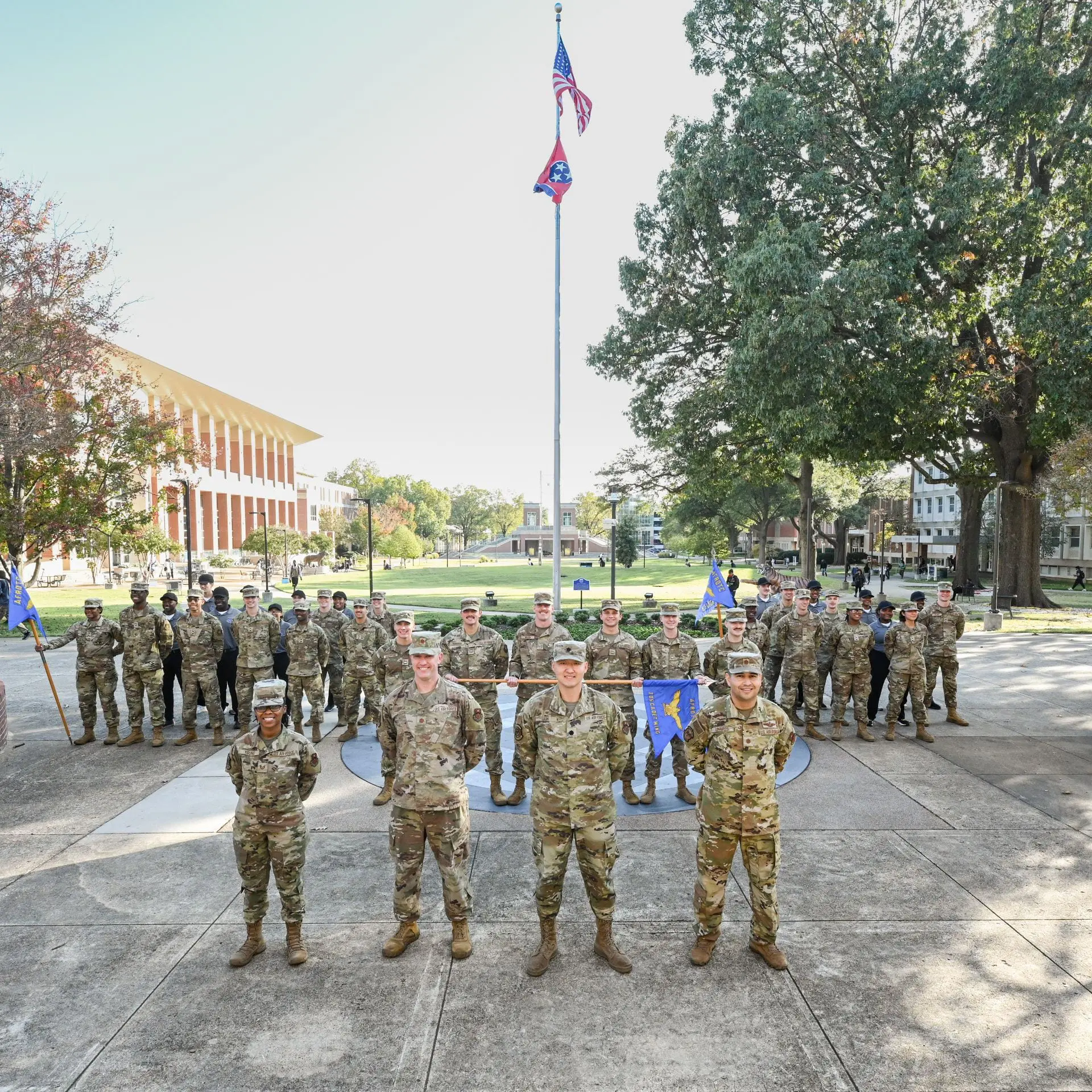
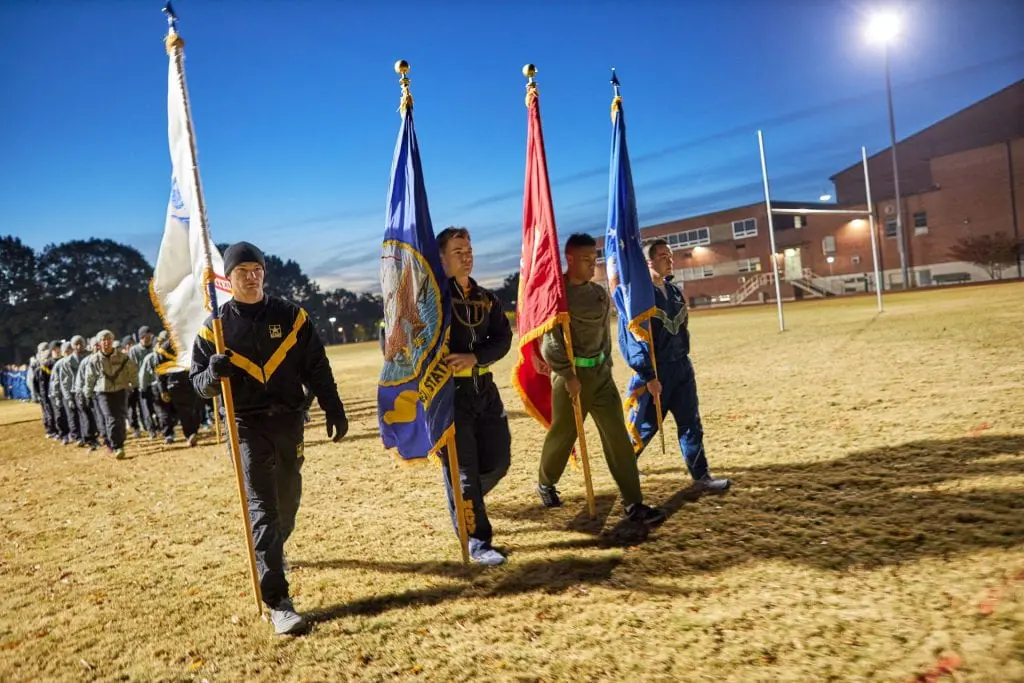
Inside the VMSS suite, there’s a large wooden table surrounded by comfy chairs. A small kitchen is stocked full of coffee and snacks. Flags and regalia representing each branch of the U.S. military are carefully displayed and the room hums with the easy conversation of people who understand one another’s unique experiences.
“Having a physical space where people can gather is important. We have a long table in there, and lot of chairs. That’s not because we’re having a big board meeting. It’s like a kitchen table out there. We’ve literally had potlucks out there and done study days out there. It’s like a family in a lot of ways,” said Eric Daniels, a Marine Corps veteran and current graduate assistant in the VMSS Office.
“We’re creating a space and opportunity for military-affiliated students to feel normal and understand that they have all the skills and abilities to be extremely successful.”
– Chris Bourque
That sense of belonging is just one part of a broader effort to help veterans find success at every stage of their college experience. The office provides guidance on everything from GI Bill benefits and academic counseling to career development and community engagement.
Despite all of the programming and guidance, Burque says the most impactful thing they can do for veterans is simply be there.
“We want to provide a successful outcome for every student. Even if it’s the end of the day and they’re walking in at 4:25, we’re going to stay and have those conversations and help that student out,” Bourque explained.
The tangible results of their dedication are already being seen. The VMSS team, most of whom are veterans or active service members themselves, has helped make the University of Memphis one of the top institutions in the nation for military-connected students. This year, the UofM earned the Military Friendly Gold designation as well as the Military Friendly Spouse School designation, marking the first time the University has received both honors.
The Gold recognition places the University of Memphis among the nation’s top institutions for military-connected students — those that go beyond meeting expectations to actively remove barriers to success. It reflects what the VMSS office has built: a true lifeline that guides service members, veterans and their families from the classroom to meaningful careers.
Together, these honors affirm that when veterans and their families come to Memphis, they find more than academic opportunity. They find a network of people dedicated to helping them build strong, fulfilling futures beyond service. For many, that future is nothing short of transformative.
“The military has provided an opportunity I would have never been able to have. My parents could never have afforded college. I definitely did not make the grades to afford it,” Daniels shared. “But now I’m able to accomplish more in my life and lift my own family out of poverty.”
According to the Tennessee Department of Veterans Services, Shelby County is home to the largest veteran population in Tennessee, making the University’s mission even more vital. For Daniels, the ripple effects of that mission are personal. “Every time a service member can make that transition, that’s a generational change,” he said. “Those who can be successful in the military, get out and get a degree have the best opportunity to permanently change the trajectory of their life.”
Through continued partnership with alumni and donors, the VMSS aims to expand completion scholarships, mentorship opportunities, camaraderie events and family resources to ensure every veteran and military-affiliated student has the support they need to thrive.
“The University of Memphis is committed to supporting our military civilian students, and the city as a whole has a rich history in supporting our military-affiliated population,” Bourque added. “These are benefits that have been earned, and there are sacrifices that these people have made that almost no one else has done or experienced. We owe it to them as a University and city to fulfill those obligations and support them as best we can.”
Duty does not end when the uniform comes off. At the University of Memphis, it continues in classrooms, in communities and in every Tiger who helps those who protect our nation find success beyond service.