

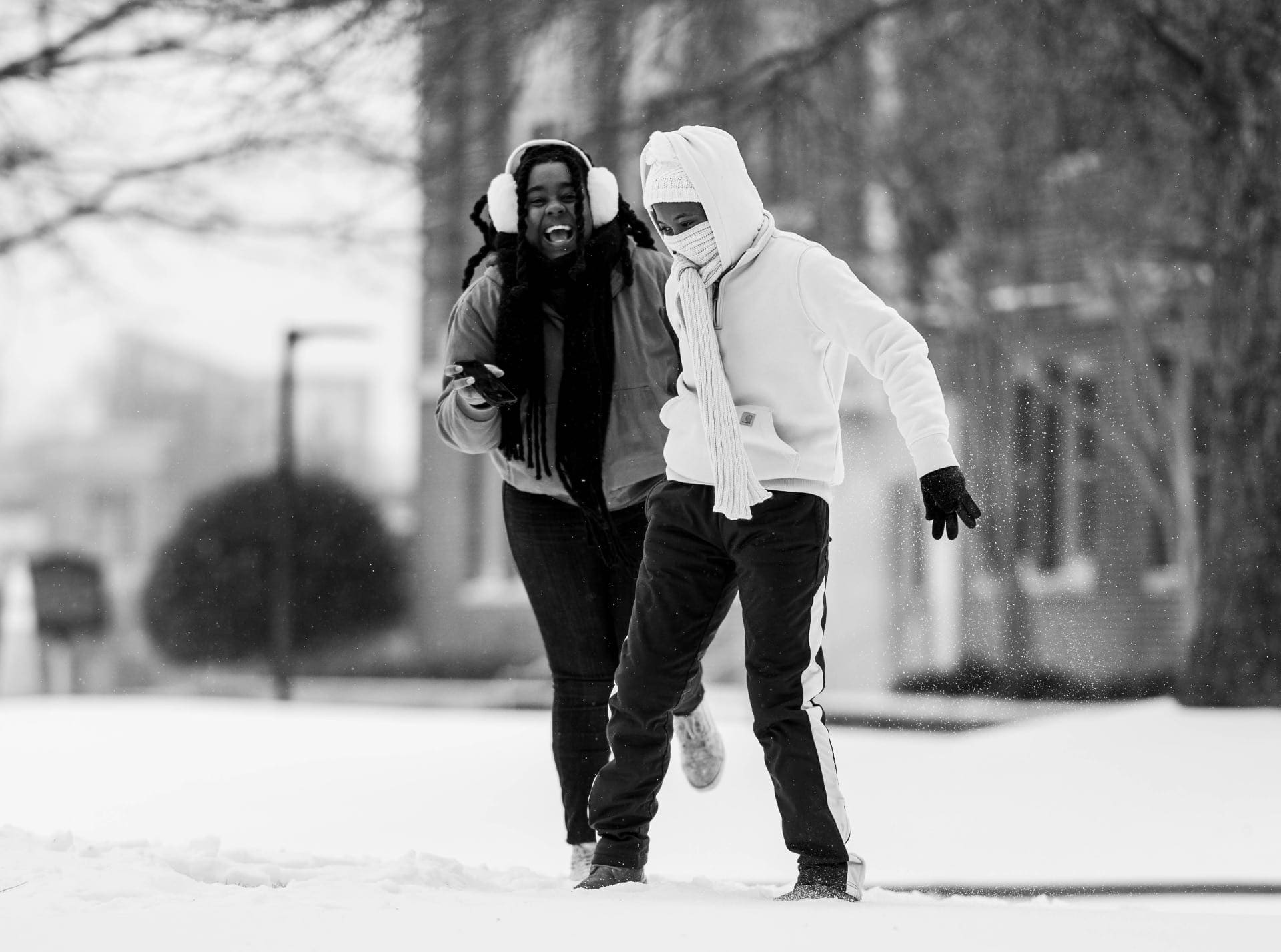
The snow stopped, but the pressure didn’t.
When most of the campus community and the city were at home during the snow storm, University of Memphis facilities leaders worked 12-hour days for more than a week clearing ice, checking steam lines and walking every building on campus — knowing one missed window or frozen pipe could cost the University millions.
Pressure can burst pipes. But for Trai Flemon, manager of Landscape Services, it reveals something else.
“Pressure can create productivity,” he said. “Pressure also creates diamonds.”
During a prolonged stretch of snow and subfreezing temperatures in late January, a cross-departmental team of facilities staff worked behind the scenes to prevent widespread damage and keep students safe.
Even when they went home, the work followed them.
“This is not a job you turn off at 5 p.m.,” Vice President of Facilities Management and Chief Facilities Officer Jeremy McClelland said. “You just can’t turn it off.”
While in-person classes paused and walkways emptied, nearly 25 employees remained on site each day.
The preparation for this operation began long before a snowflake fell.
Despite weather models predicting anywhere from two to 25 inches of snow, the team moved forward with the same protocol. Contractors and equipment were secured early, and Ice Melt was ordered months in advance.
“These guys were able to get all of those reserved ahead of time,” McClelland said. “So, people were stationed here, ready to go and we weren’t having to be desperate and call people after the fact.”
At 5:30 a.m., before sunrise, supervisors were already pushing salt across frozen brick, breath visible in the air.
Long before most of the city tried to navigate the ice, facilities crews were already on campus. Some arrived before the sun rose. Some never left.
“We had people that were so committed to the response; they were staying and sleeping on site,” Gina Neal, director of Building Services, said.
From Friday through the following Wednesday, teams rotated through residence halls and academic buildings, checking every floor and room of every building. “From mechanical rooms to custodial closets,” Neal said.
The work extended outdoors in the freezing cold. Landscape crews cleared walkways from dorms to the dining hall, knowing students living on campus still needed to eat. Even McClelland joined the effort, laying salt and shoveling snow alongside custodial staff.
“No job was beneath anybody,” Jake Wilson, director of plant operations controls, said. “It didn’t matter what your trade or your skill was – we were all just trying to get the job done.”
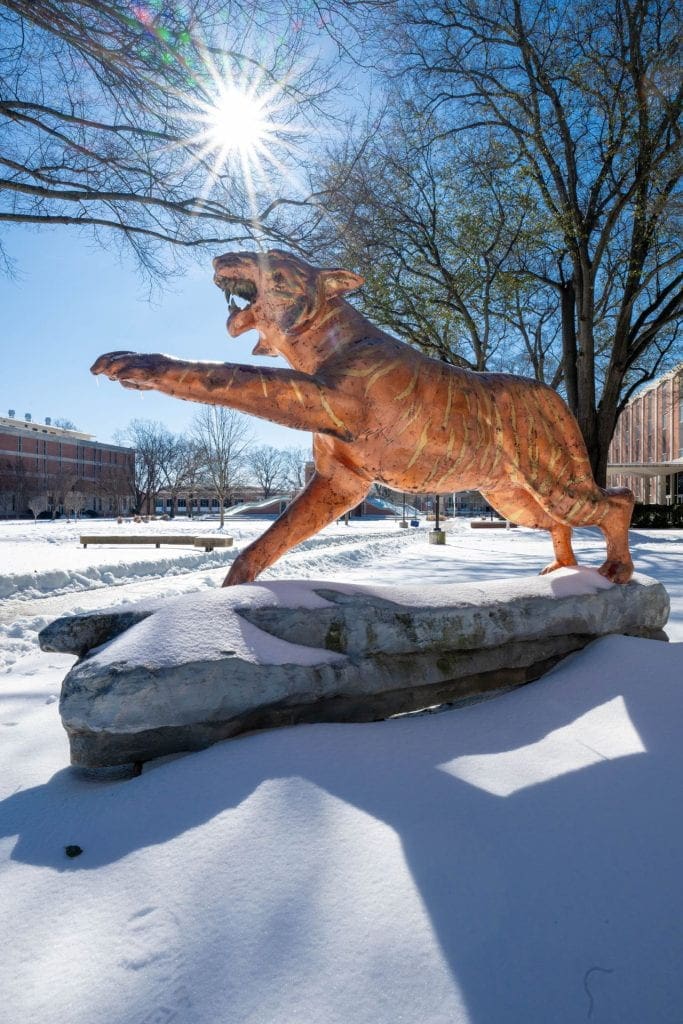
Even transportation became part of the job. Staffers in trucks picked up colleagues who couldn’t drive safely on the icy roads. Vehicles slid, skid steers stalled and campus buggies were stuck. Yet each morning, roughly two dozen employees reported back to campus.
“When you see those texts, it motivates you,” Wilson said of a cross-departmental iMessage chain created during the response. “It keeps you moving. You’re like, ‘Okay, this is a big team.’”
For Julian Boyland, director of maintenance operations, the energy carried beyond the messages. “The enthusiasm and the pride that they showed, it was contagious,” he said.
But when the messages stopped and campus quieted, the weight of the responsibility didn’t.
In football, no one ever notices the offensive line — until things go horribly wrong. In facilities management, you’re invisible — until a snowstorm turns a city upside down.
“If people aren’t asking for things, it means we’re getting ahead of it,” McClelland said. “We’re in the business of service.”
That commitment shows up in the small moments.
McClelland said he tries to attend as many graduations as he can, a tradition that reminds him why his work matters.
“We don’t need recognition or anything else,” he said. “We just want to make sure we’re doing what we’re supposed to do to make this University thrive.”
When classes resumed and students returned, the sidewalks were clear, the buildings were warm and the steam kept running.
The work, once again, became invisible.
“To me, that’s the culmination of everything that we do every single day,” he said. “You watch them walk across that stage, and you start thinking — we played a part in that.”
After crews had cleared part of campus, a student braving the cold for her graduation photos asked two of Flemon’s supervisors for a picture together.
“She had a huge, beaming smile and was having a good time,” Flemon said. “It was just really cool — you don’t realize the impact you have.”
For a team that spends most of its time in steam tunnels or behind mechanical panels, that kind of recognition is rare. More common is the opposite – students and professors walking across campus without a second thought.
To Neal, that’s the whole point.