

In a physical therapy clinic in rural West Tennessee, a handwritten schedule hangs on a clipboard. Appointment times have been carefully arranged to make use of every available provider, yet the week still has long stretches where rooms sit unused.
The reason is simple — there are not enough clinicians to fill them.
Some job openings have remained unfilled for months. Other facilities can’t find practitioners to fill them, often going weeks without a single application.
On top of this, the community continues to age. People keep working in physically demanding jobs. Injuries keep happening. The need grows, but the workforce does not.
A few hours away in Memphis, another barrier to care takes form.
An older man is struggling with hearing loss. Even if he could find a nearby clinic, he has no way to get to his appointment and he is unsure if the specialist could actually help him.
In many urban neighborhoods, the path to routine hearing care has never been simple.
Specialized clinics are few and far between, and even when services exist, daily realities make them out of reach. Many families juggle tight budgets, jobs without sick leave and long commutes on limited transportation, leaving little room for preventive appointments. Others have gone years without seeing a provider because past experiences have made the healthcare system feel uncertain or unwelcoming.
Layer by layer, these circumstances create a landscape where early screening is rare, and hearing issues often go unnoticed until they become urgent. For many Memphians, emergency rooms have become the default entry point to care, a place that cannot offer the long-term support these conditions require.
These moments reveal a shared truth.
Access to healthcare is not a single challenge but it is one that shifts with geography, resources and how connected people feel to the systems meant to support them.
At the University of Memphis, two initiatives are stepping into these gaps with place-based strategies designed to strengthen the well-being of communities across Tennessee.
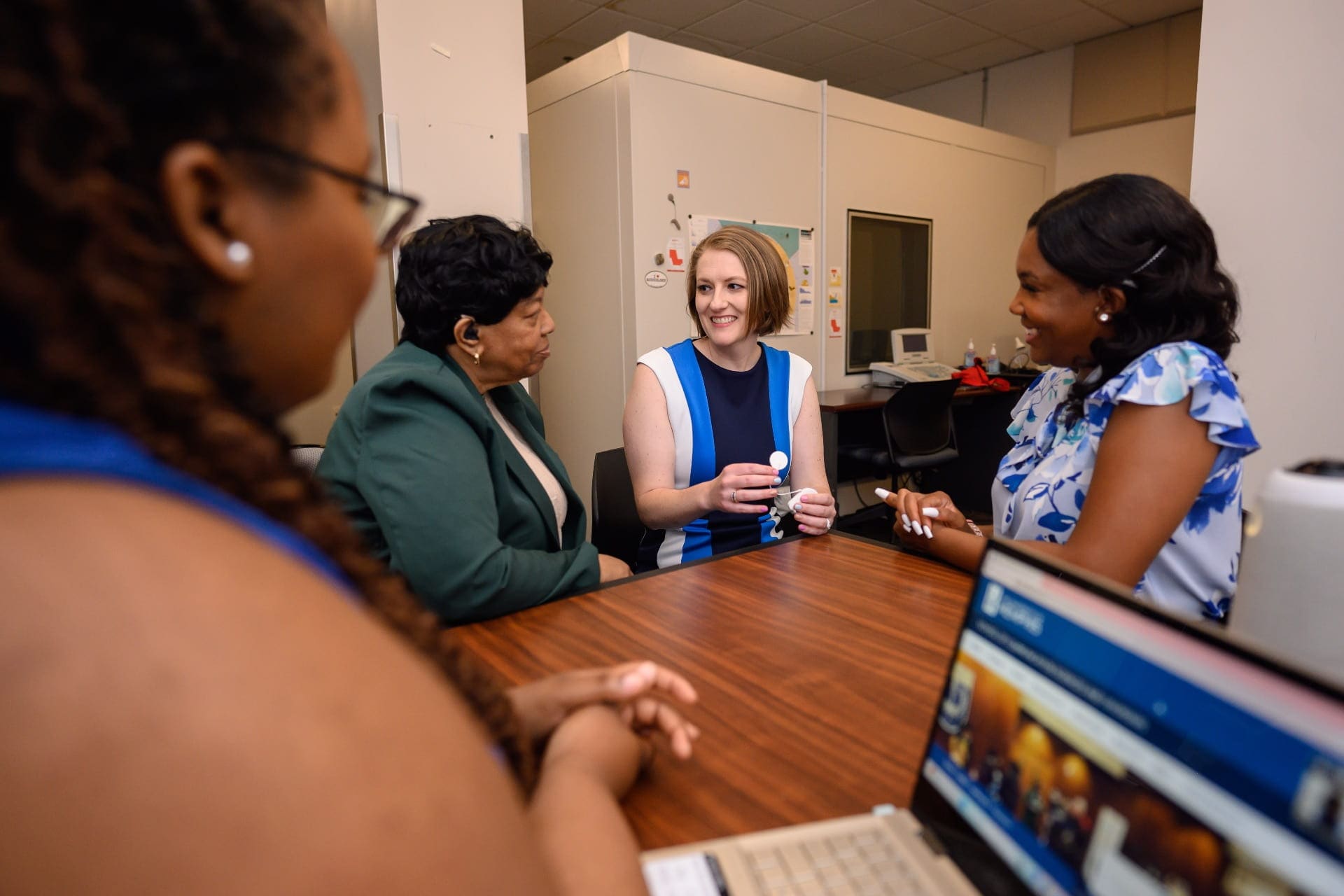
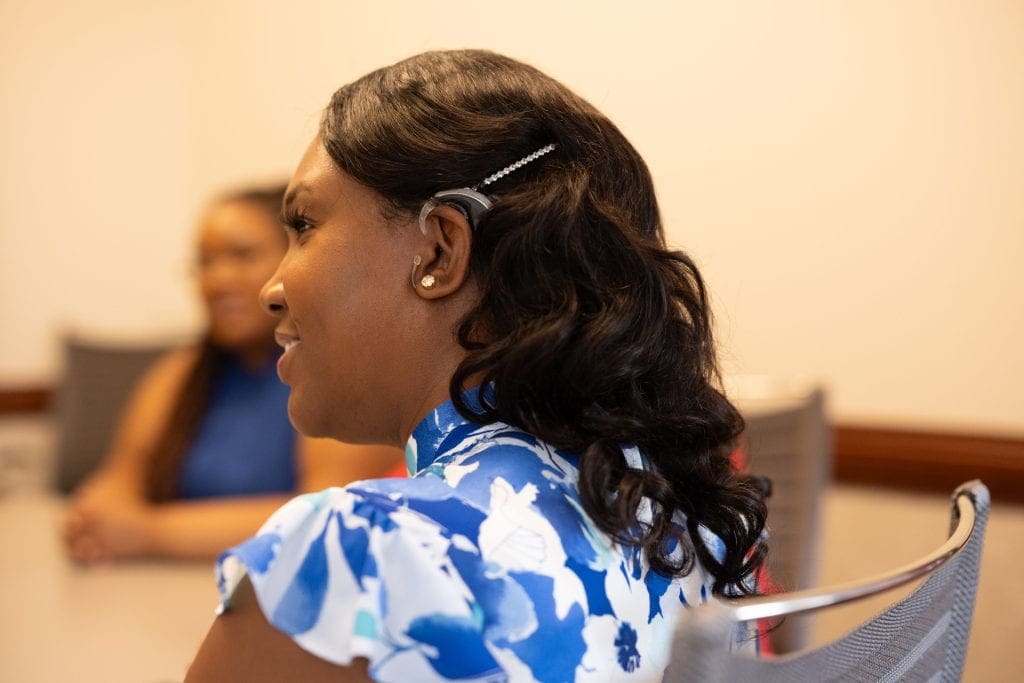
The first strategy is the new Doctor of Physical Therapy program at the University of Memphis Lambuth campus. The other is the Memphis SOUND Project (Serving Our Underrepresented Neighbors who are Deaf or Hard of Hearing), a community-engaged hearing health initiative through the Cochlear Implant Research Lab (CIRL).
CIRL views communication as a fundamental part of the human experience.
“When people have a breakdown in their communication, they experience a breakdown in the way they can fully participate in their communities,” says Dr. Sarah Warren, team lead of the Memphis SOUND Project. Supported by external and internal research grants — including funding from the American Speech-Language-Hearing Association, the UofM Division of Research and Innovation, and a pending application to the National Institute on Deafness and Other Communication Disorders (NIDCD) at NIH — the Memphis SOUND Project is able to work with the community to generate evidence that will shape programming and education, leading to improvements for individuals with hearing loss.
Memphis SOUND is working toward expanding access by first doing the foundational work necessary to get it right. The project is “designed to address those challenges by bringing hearing health services into trusted community spaces and building relationships first rather than expecting people to navigate systems that weren’t built with them in mind” by generating the community-informed evidence needed to design interventions that will actually work.
Together, both CIRL and the SOUND project reflect what access can look like when a University and its supporters recognize a need, respond directly and commit to serving its region with intention.
While rural challenges are primarily shaped by distance and lack of providers, the barriers in Memphis stem from mistrust and a lack of opportunity. The Memphis SOUND Project focuses on hearing health among primarily older adults in the Memphis community who are often underserved by traditional healthcare systems.
Rather than expecting people to enter unfamiliar clinical environments, the SOUND project brings care to trusted places.
“The project was co-developed with community partners and is building on long-term relationships with local faith-based organizations, which serve as trusted spaces for outreach education and on-site hearing screenings.” says Dr. Sarah Warren, team lead for Memphis SOUND.
That foundation reflects a shared leadership model.
“A core principle of the project is shared leadership,” Warren explained. She also credits community partner Iris Allen as being central to that work. “I work closely with Iris Allen, a community partner who helped found and shape the project from the beginning and plays a central role in engagement, trust-building and implementation.”
As Warren explains, “Community voices guide both what we study and how the work is carried out.”
Recent research highlights the urgency.
“In the past couple of years, new research has found that hearing loss is the largest modifiable risk factor for cognitive decline and dementia, yet most people don’t know about that connection.”
Many individuals have never encountered this information.
“It simply hasn’t reached them, even though early identification and intervention could meaningfully change long-term health outcomes,” she said.
Dr. Warren and the rest of the SOUND team see that gap as a call to action.
“We see it as a responsibility to share that knowledge broadly and especially with communities who have historically had the least access to preventive health information,” Warren said.
Awareness, however, is only part of the challenge.
“The barriers these individuals face go far beyond awareness,” Warren explained. “They include limited access points for care, structural hurdles within healthcare systems and longstanding mistrust rooted in prior experiences.”
Memphis SOUND is working toward expanding access by first doing the foundational work necessary to get it right. The project is “designed to address those challenges by bringing hearing health services into trusted community spaces and building relationships first rather than expecting people to navigate systems that weren’t built with them in mind” by generating the community-informed evidence needed to design interventions that will actually work.
Collaboration across campus strengthens the work.
Warren said, “From the University side, Memphis SOUND brings together collaborators across multiple schools, including the School of Communication Sciences and Disorders, the School of Public Health and the School of Social Work alongside community partners.”
Warren notes that it reflects a broader commitment to interdisciplinary and community-centered impact right here in Memphis.
Looking forward, she sees significant potential.
“Our vision is for Memphis SOUND to serve as a prototype for similar community-engaged hearing health initiatives in other urban areas facing comparable inequities.”
As a Memphian, she finds the work deeply meaningful.
“I have found our community to be enthusiastic about opportunities to improve our city and the lives of people who live here,” she said.
In West Tennessee, just 75 miles from Memphis at the Lambuth campus, the mission is the same.
Dr. Jacque Bradford, director of the new DPT program at Lambuth, has spent years watching clinics struggle to hire enough physical therapists to meet the demand.
“They have open PT positions but graduates from DPT programs in more urban cities tend to stay in the urban city or go out elsewhere,” Bradford said.
The issue spans the entire region.
“My colleagues who work, lead and have developed and established clinics in West Tennessee are unable to serve their patient population because they don’t have the staffing they need.”
Delayed care creates a downstream impact for families who must balance time off work, travel, cost and the physical toll of waiting.
As Bradford explains, “Distance is part of it too, but if you have a clinic and you’re not even able to get the clinic staffed, that’s another whole layer to it. It’s a big layer.”
Rural labor often involves physically demanding work and the risk of injury is high.
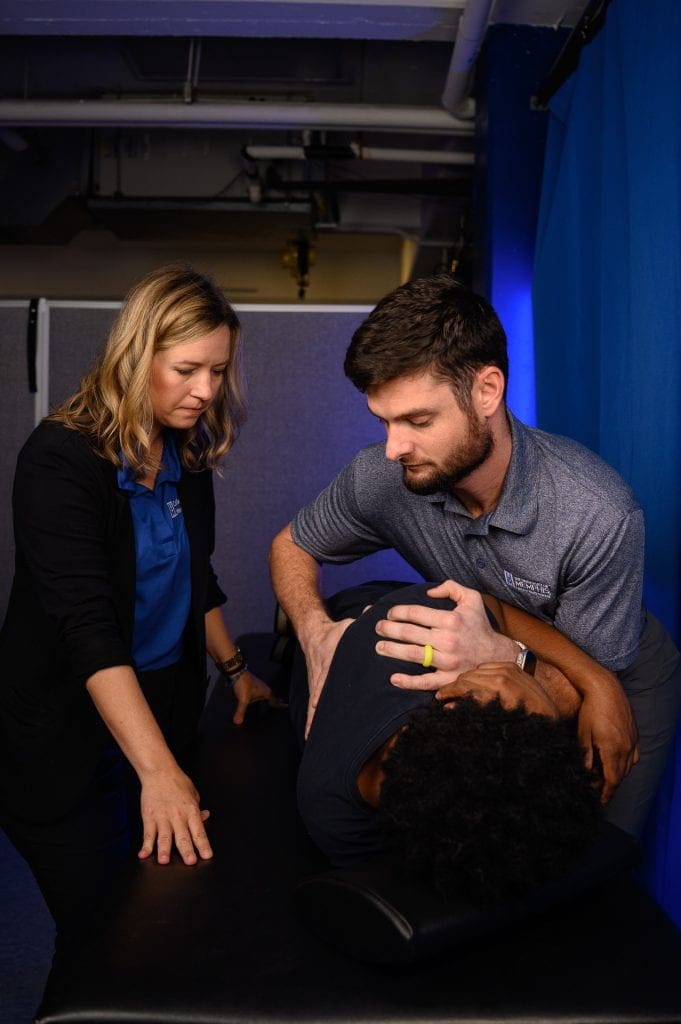
“If you think about rural communities, what kind of jobs do you think of? Sometimes you think of the farming industry, you think of blue-collar labor. And when you think of those jobs, the incidence of injury is higher,” Bradford said.
Effective physical therapy not only restores mobility but reduces reliance on pain medication.
“This program also helps reduce the need for opioids and it keeps our community safer and healthier in the long run,” she said.
Jackson is a natural home for a program like this.
As Bradford shares, “Jackson, Tenn is known as Hub City, and Hub City is really the hub of West Tennessee.”
The Lambuth campus is close to Jackson Madison County General Hospital and near clinics that serve both urban and rural patients. “This campus is to me a hub for healthcare education.”
That sense of purpose guides the program.
“Our mission emphasizes rural healthcare…ensuring that every decision we make as we continue to develop this program is reflecting back on our mission,” Bradford said.
The program relies on strong partnerships throughout West Tennessee to achieve this mission.
“First and foremost, we would not be a program without these partnerships,” Bradford said.
Clinics provide training environments where students gain direct experience. In return, the University offers shared resources and continuing education. Community therapists help with simulation activities and serve as mentors.
“We need clinical sites… they need our graduates, they need to educate their team… in a nutshell, it’s a pipeline,” she said.
Bradford hopes this pipeline leads to a workforce rooted in the region. “I hope they will be practitioners who will want to work in West Tennessee or rural communities.” She also wants graduates who embody empathy and patient-centered care.
“I want them to be patient first providers and very goal-oriented in the sense of meeting the patient’s needs over their own as a physical therapist. I would hope that they would all be empathetic,” Bradford said.
Although the Lambuth DPT program and Memphis SOUND address different needs, they share a common philosophy: Bring care closer. Build trust. Honor the communities being served.
Warren said, “The comparison between the two programs highlights how expanding medical services can look different, but can be equally impactful across urban and rural settings.”
These initiatives also demonstrate the impact of the University’s investment in regional wellbeing. When new programs take root in West Tennessee and community-engaged research grows in Memphis, the University strengthens its role as a partner in the health of its state. Alumni, donors and community supporters help fuel this work by believing in its purpose and by trusting the University to lead with care.
Across Tennessee, the work underway in classrooms, clinics, churches and community centers is reshaping what access can mean.
In Jackson, future physical therapists prepare for the day they will serve the communities that trained them. In Memphis, community organizations partner with the UofM to help increase access to hearing healthcare in a space where they feel seen and known.
This is access reimagined through commitment and connection made possible by a University that believes in meeting people where they are and helping them move forward with confidence and care.