

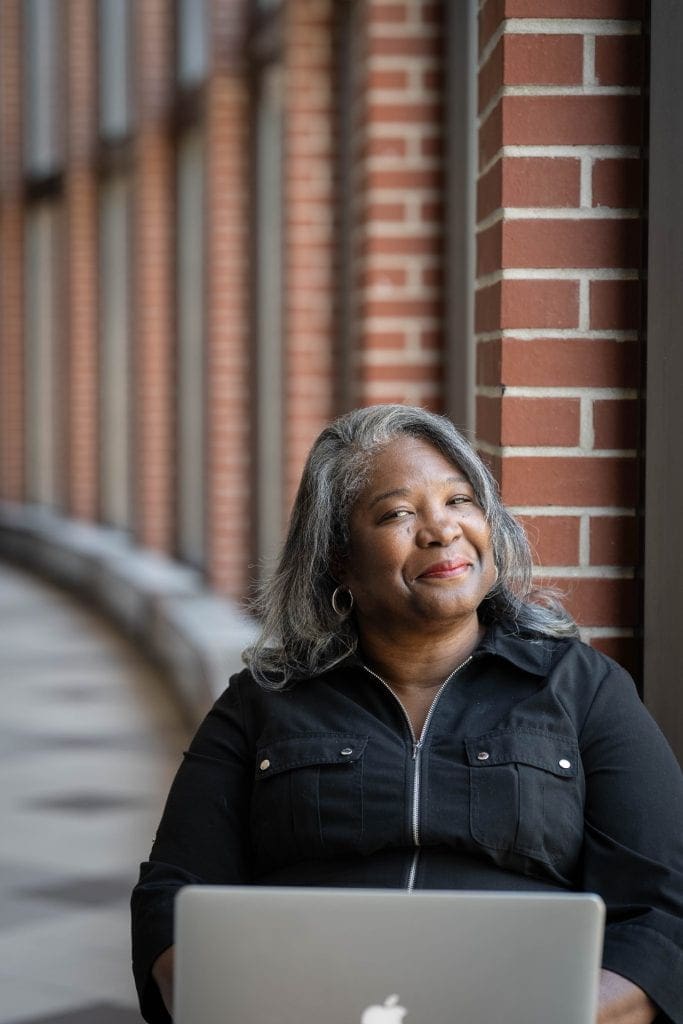
Judy Davis waited more than four decades for a moment she wasn’t sure would ever come.
She first walked into a college classroom in 1981, carrying the same quiet hope many students do.
Then life intervened.
Work filled most of her days, and family filled the rest. Responsibilities stacked one on top of another until the goal she once held so clearly began to blur at the edges.
Years passed. Then decades.
By the time she returned to the University of Memphis in 2018, her life was already full. Shifts at FedEx were followed with nights caring for her mother with Alzheimer’s. Doctor’s appointments, keeping up with medication schedules and responsibilities seemed to never pause.
There was no perfect time to go back to the classroom. There was only the decision to try.
But despite personal loss and constant demands on her time, she kept going.
And forty-four years after she first stepped into a classroom, Davis graduated with a bachelor’s in organizational leadership in 2025.
“I’ve dreamed of this moment for so long, but I never imagined I’d actually get here. Without your belief in me…I don’t know if I would have made it this far,” she said.
Programs like Learning Inspired by FedEx (LiFE) make stories like Davis’ possible. They give employees the opportunity to earn a degree (tuition-free) while continuing to work — removing a barrier that stops many before they ever begin. LiFE encourages employees to get their degrees or certifications that would unlock higher-paying positions and, in turn, peace of mind.
Davis’ story feels extraordinary, but what it reveals is something far more common.
Across Memphis, thousands of adults are caught in a similar space. According to the 2025 Tennessee Higher Education Commission report, nearly 90,000 adults over the age of 25 in Shelby County have some college experience, but no degree.
They are already working, already contributing, already carrying the weight of families, bills and responsibilities. The desire to move forward is there, but the path is not always transparent.
For many, the challenge is not a single obstacle. It is a combination of pressures that pull in different directions. Time is limited, finances are tight, family responsibilities cannot be set aside and the idea of starting over can feel overwhelming.
“Being a full-time student and exclusively is not in the cards for everybody,” said Executive Director of UofM Global Courtney Brafford. “Adult learners often feel like, ‘Do I belong here? Do I belong in college?’” she said. “College to them is a 20-year-old’s game.”
And even when the desire is there, the structure often isn’t.
For some students, those barriers begin even earlier, before they ever step into a classroom.
First-generation students often arrive on campus without a roadmap. There is no inherited knowledge about how to navigate higher education, no built-in understanding of where to go or who to ask. The system can feel unfamiliar from the very beginning.
The Office of First-Generation Student Success works to change that experience.
The office is proactive in making sure these students are aware of the existence of resources. They build a community that feels warm and inviting and aligned with their interests. Students are guided through financial aid, connected to leadership opportunities and supported as they find their footing.
Through holistic coaching, one-on-one mentoring and connection to campus-wide resources, the Office of First-Generation Student Success serves as both a guide and an anchor to help students understand academic, financial and personal challenges while building confidence in spaces that may feel completely unfamiliar.
By connecting students and their families to tools like financial aid guidance, leadership development and career planning, the Office ensures that first-generation students are never navigating the system alone.
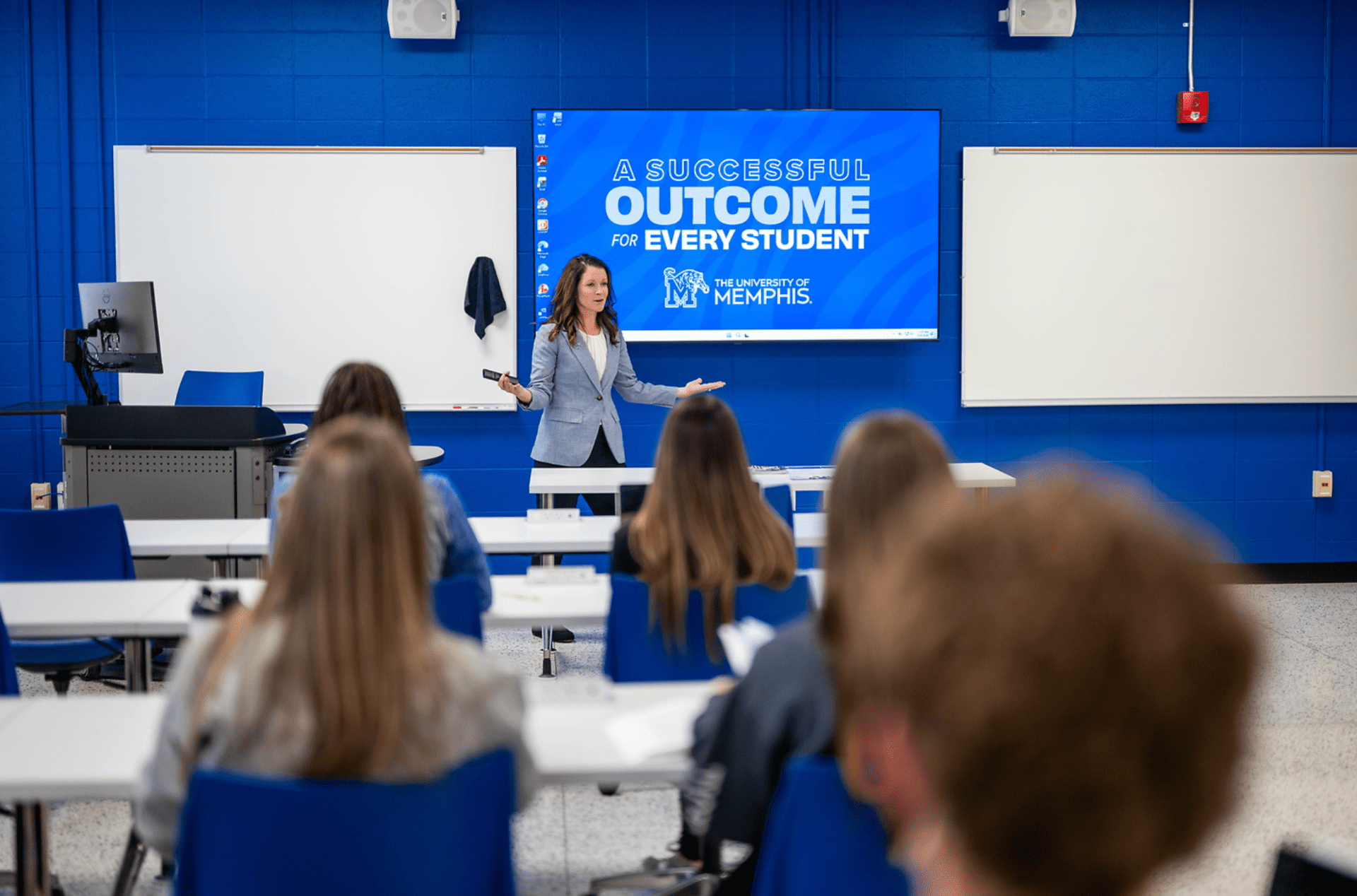
This work is part of a broader effort across the University of Memphis to remove barriers wherever they appear to provide a successful outcome for every student. Rather than asking students to adapt to a rigid system, the University has built one that adapts to them.
“We already had so much of this in place. We just looked at it in a different way,” Brafford explained.
Work experience becomes college credit. Courses are offered in formats that fit around busy schedules. Partnerships with employers create direct pathways from education to advancement. Each piece reduces friction and opens space for progress.
“And every little thing that they get that they don’t have to fight for is something that makes them feel like they belong here,” Brafford said.
And that’s just the beginning. Belonging alone is not the end goal; stability is.
The UofM recognizes that economic mobility is not approached as a single outcome, but as a multi-prong system that extends beyond the classroom into careers, households and communities.
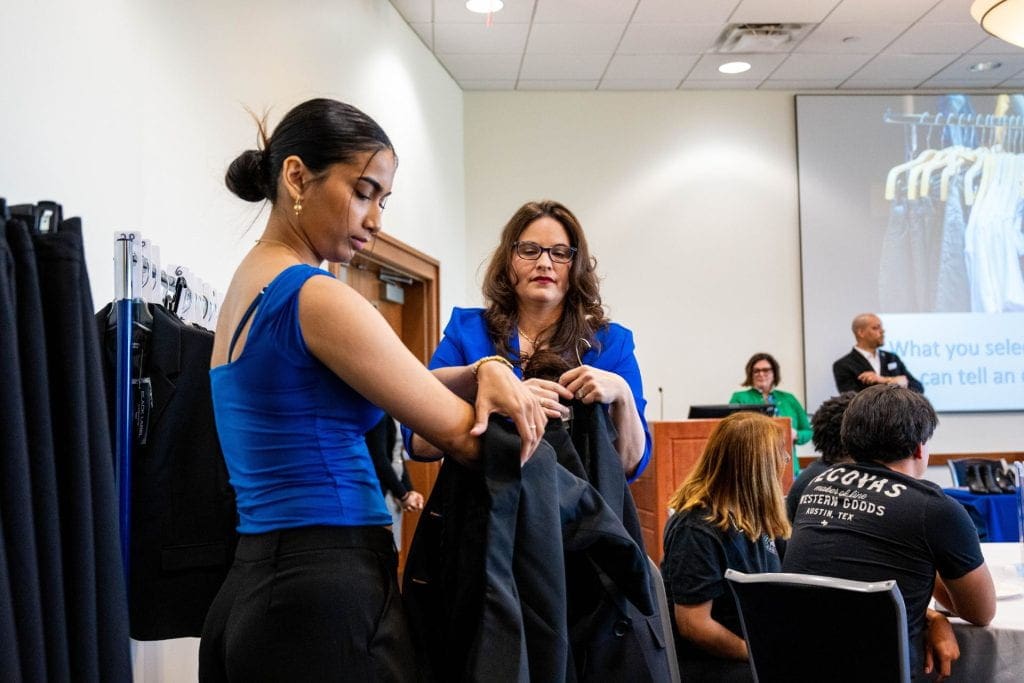
“We identify the barriers that keep them from getting there,” said Executive Director of the Center for Regional Economic Enrichment Tracy Robinson. “Then our team goes into action on helping them remove those barriers.”
Programs like Growing Relational and Occupational Wealth in West Tennessee Households (GROWWTH) take that work beyond the classroom and into the realities of daily life.
“We’re working specifically with low-income families,” Robinson said. “What are the goals for their family?”
For some, that goal is steady, full-time employment. For others, it is owning a home, earning a promotion, or simply reaching a point where financial stress is no longer a matter of survival.
The first step is a shift in mindset.
It’s moving from survival mode to the belief that something more is possible. Many participants come in carrying years of instability, uncertainty, or self-doubt. What GROWWTH provides is not just a pathway forward, but the space to begin seeing one.
“Our goal is to help those families find economic stability, so that they can get off government assistance programs and ideally stay off,” Robinson said.
That impact is visible.
GROWWTH has served more than 3,000 individuals across 21 Tennessee counties, with more than 900 individuals enrolled. Participants receive career readiness training, case management, and support services like childcare and transportation. Resources that address the everyday barriers that often stand in the way of long-term progress.
This is what an ecosystem of support looks like in practice. It is a strategically connected network that moves with people as their needs change.
“Maybe not everybody wanted a bachelor’s degree… maybe they just needed a certificate to get them to the next level,” Brafford said. “It’s breaking up that very large, scary… endeavor into something manageable.”
The results are tangible.
More than 1,200 students have completed degrees through the combined efforts of these programs. Many have been able to advance further in their careers. Others have re-entered the workforce with new credentials or created new opportunities for their families.
Programs like Credit for Prior Learning help hundreds of students each year turn real-world experience into academic progress. Other programs, like the Prep Academy, exist solely to help students bridge the gap between their education experience and enrollment at the University.
“We do often talk about how much an education can help a student,” Brafford said, “but sometimes we forget to talk about how the student helps the institution.”
Adult learners bring perspective shaped by experience. They contribute to classrooms, workplaces and communities in ways that extend far beyond a degree.
The University of Memphis has built a model that works. The question now is how far it can reach.
“I would love to see more short-term credentials happen,” Brafford said. “Something that connects those dots… and makes things more real in terms of what are the steps.”
What limits expansion is not vision, but capacity.
With additional investment, programs like LiFE, GROWWTH and the Office of First-Generation Student Success, could reach significantly more students and families. Expanded support would open access to flexible credentials, strengthen workforce pipelines and create long-term economic stability across the region.
More importantly, it would allow the University to reach people earlier, before barriers grow heavier, before opportunities narrow and before potential is set aside.
At the University of Memphis, that alignment is already changing lives by helping students advance their careers and build stability for their families. The stronger that foundation becomes, the more resilient the workforce across Memphis grows.
The partnership between the University and employers like FedEx, Nike and Methodist has helped make that possible.
With continued investment, that impact could grow significantly and potentially reach more current and future employees, removing more barriers and expanding pathways to advancement for thousands of working adults across the region.
For Davis, that opportunity came just in time.
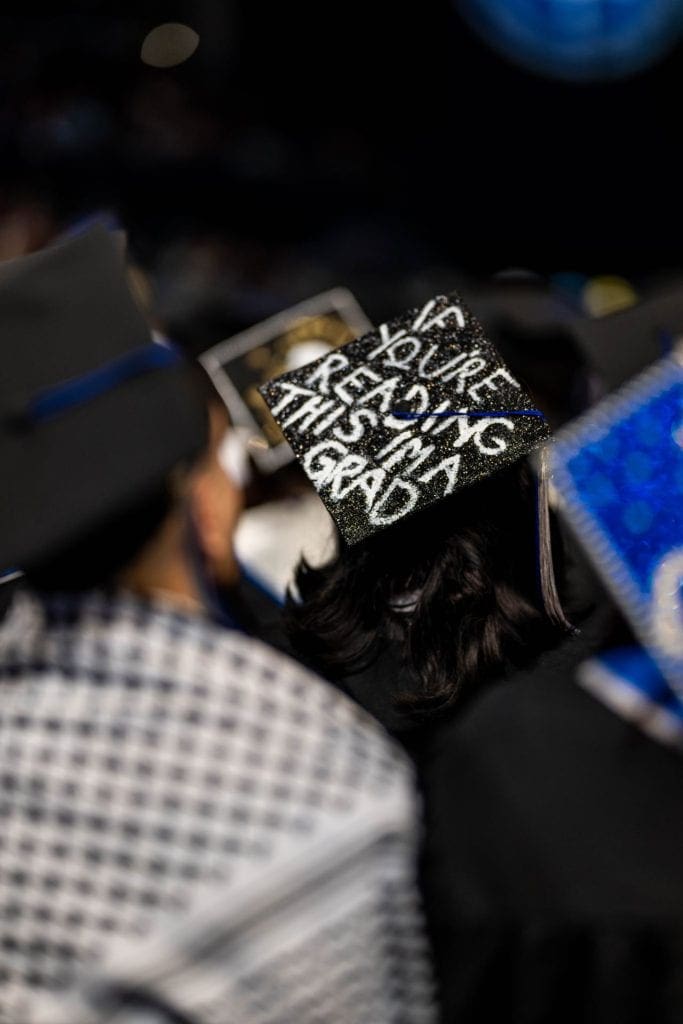
After decades of waiting, she crossed the stage with her degree in hand and her dream fulfilled.
Her story is about what becomes possible when opportunity is aligned with real life and when education, employment and support systems work together instead of in isolation.