

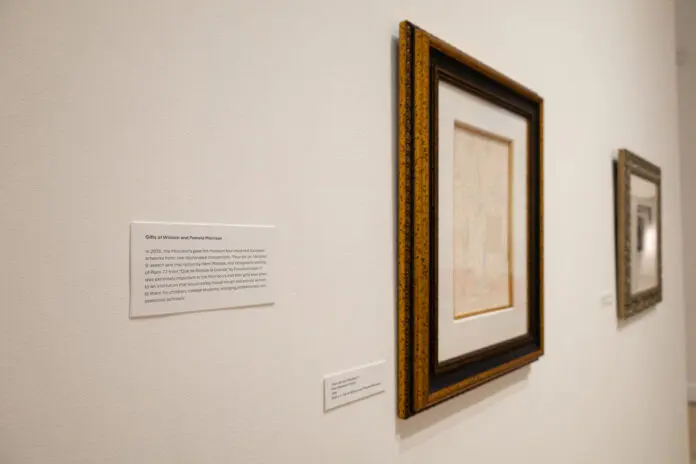
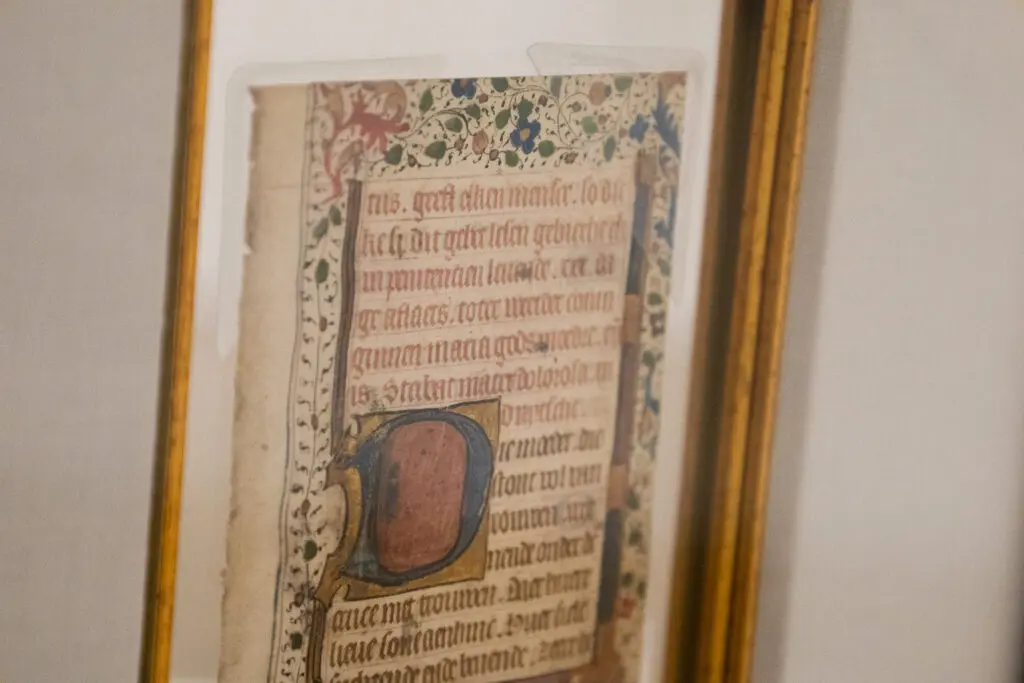
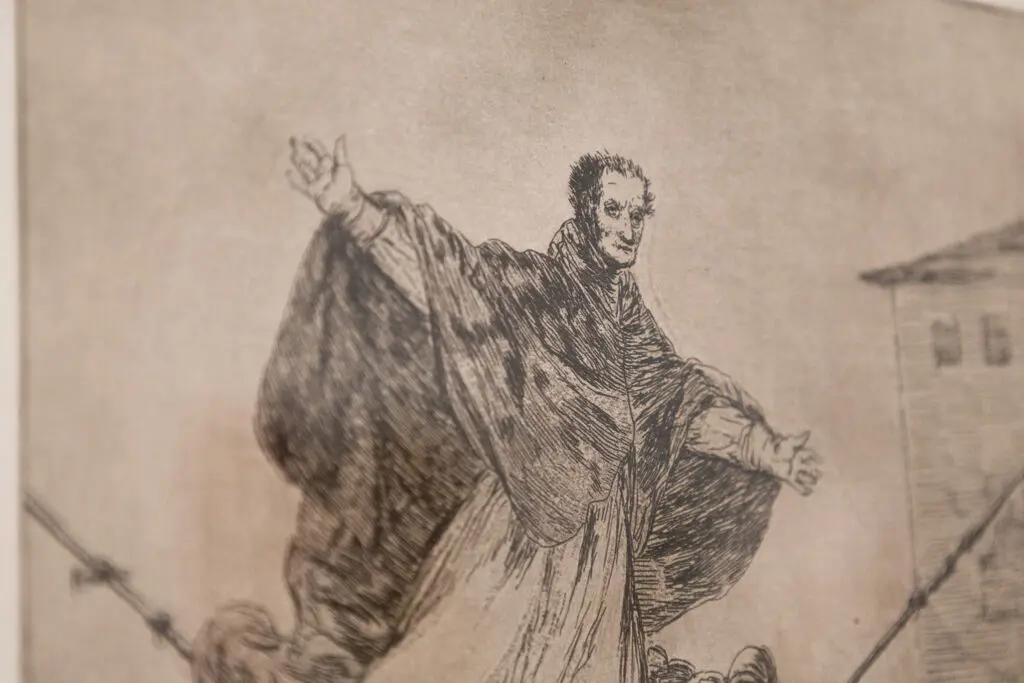
For years, pieces of history hung on the walls of Bill (’05) and Pamela Morrison’s home. A Goya lithograph depicting the upheaval of 19th-century Spain. A colorful sketch by Henri Matisse. Delicate medieval manuscript pages adorned with intricate details that have survived through the centuries. Each piece reflected the couple’s love of history, learning and the stories that connect generations. The artwork brought them joy, sparked conversation and served as a daily reminder of the people and cultures that came before them. From the very beginning, the Morrisons knew they were only temporary caretakers. “We wanted to make sure the pieces were somewhere they could be taken care of and shared with the public long term,” Pamela said. “They are pieces of history, and we wanted them to be held by an institution that would continue to care for them.”
That desire recently led the couple to donate several pieces from their collection to the Art Museum of the University of Memphis, where they will become part of a growing collection used to support teaching, research and student engagement. The gift is also the beginning of a larger legacy. Through their estate plans, the Morrisons plan to gift additional works from their collection to benefit the museum.

For Bill and Pamela, both longtime educators, the decision was driven by the desire to make history tangible for students from around the country. When the University shared its vision for how students could interact with the collection, the couple immediately saw the potential.
“Some of the students would have access to things they would never have seen before,” Bill says. “They would be able to use them for research projects, dissertations and other academic work.”
While several institutions expressed interest in the artwork, the University of Memphis stood apart.
“The University of Memphis was the only organization that came with a plan,” Bill recalls. “They literally showed us how these pieces would be used. That really impressed us.”
That plan resonated deeply with the Morrisons, who spent their careers in education and understood the power of firsthand learning experiences.
According to Leslie Luebbers, executive director of the Art Museum of the University of Memphis, gifts like these allow students to engage directly with objects that bring history to life. Whether studying art, literature, history or culture, students can explore works that would otherwise require travel to major museums and collections around the globe. “It’s both humbling and enlightening,” she said. “The Morrisons wanted our students to be able to appreciate that they’re part of a longitudinal world.”
The Morrisons’ gift also fills important gaps within the museum’s collection. The Goya, Matisse and manuscript pages provide new opportunities for teaching while expanding the breadth of materials available to students and researchers.
For Bill, the impact of gifts like these extends far beyond a single generation.
“What I would say is money is a one-time spend,” he says. “Giving gifts like this enhances the culture and the academics at the University and the city for a lifetime.”
That philosophy is what inspired the couple to think carefully about the future of their collection. While they continue to enjoy many of the pieces they have gathered over the years, they have already made plans to ensure those works eventually find a permanent home where they can continue to educate and inspire. Pamela hopes their story encourages others to think about the legacy hidden within the objects they treasure most.
“So many of us have things in our homes, and if something happens to us, there’s no plan for those things,” she says. “It’s good to be intentional and find a home for things that are special to you.”
Long after the artwork has left the Morrisons’ walls, students will continue to study it, question it and learn from it. Future researchers will discover details that might otherwise have remained unseen. New generations will encounter pieces of history that connect them to a larger human story. For Bill and Pamela Morrison, that possibility is the greatest gift of all. Gifts of appreciated assets like these rare works of art are not only enriching for our community, but are also a tax-savvy way to give.
To learn more, contact Wesley LaRue, director of Planned Giving, at wtlarue@memphis.edu or 901.678.2732.