

Artificial intelligence is becoming part of the decisions that shape people’s daily lives. It helps power online services, fraud detection, transportation systems, recommendation tools and, increasingly, the systems we rely on at work, at home and across society.
But as AI becomes more powerful, one question becomes more urgent: How do we make sure these systems are secure, reliable and trustworthy?
I’m an associate professor in the Department of Computer Science at the University of Memphis, where my research focuses on AI security, data security, blockchain, network security and applied cryptography. My work looks at the entire life cycle of an AI system — from the moment data is collected or shared, to the training of the model, to the final system that people use in the real world.
At each stage, there are risks. Sensitive data can be exposed. Models can be attacked or manipulated. Deployed systems can make unsafe decisions if they are not properly protected. My goal is to make sure AI is not only powerful, but also safe enough for people to trust.
Building Trust Across the AI Life Cycle
One important part of my research focuses on protecting data. We have developed cryptographic approaches for secure data sharing and acquisition. However, when data includes sensitive personal, financial, medical or business information, it is not secure to send data into one central server to train a model.
One solution we study is called federated learning. Instead of sending everyone’s data to a central server, each participant keeps their data locally while still contributing to the training of a shared model.
That approach can help protect privacy, but it also introduces new challenges. Some participants may be malicious or unreliable. They may send incorrect model updates, intentionally or unintentionally, which can weaken the final system. So, we design algorithms that can identify and filter out harmful inputs. We also study robust aggregation methods that help the model remain reliable even when some parts of the training process cannot be fully trusted.
In other words, we are asking: How can many users work together to train AI while still protecting their data and defending the system from attack?
From Data Security to Real-World Safety
Security does not stop once a model is trained. In fact, the deployment stage is often where some of the biggest risks appear. Once an AI system is connected to real applications, it may have access to databases, user accounts, authentication systems or other sensitive tools.
If those systems are not designed carefully, the consequences can be serious. We have already seen examples where AI agents take actions too quickly for people to stop them, including deleting important information or making decisions that create security risks.
That is why my research also examines system-level protections such as token management, authentication and access control. We want to make sure AI systems only do what they are authorized to do and that important decisions remain secure, accountable and, when necessary, guided by human judgment.
Security is never finished. New technologies create new attacks, and new attacks require new defenses. That constant change is one of the reasons I enjoy this field. There is always something new to learn.
Preparing the Next Generation of Cybersecurity Leaders
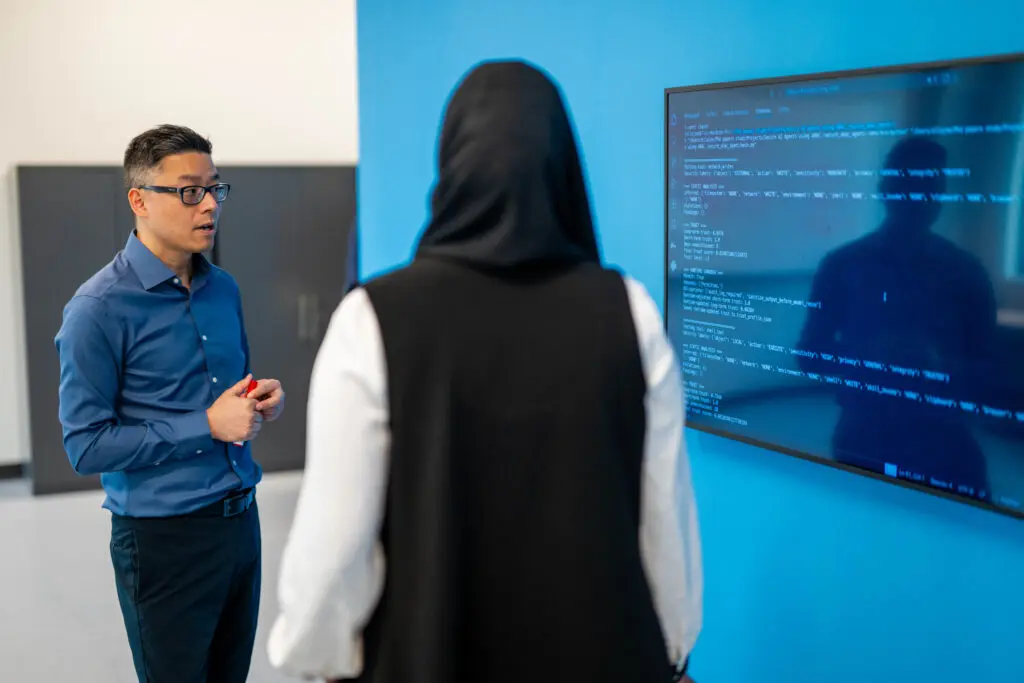
One of the most meaningful parts of my work at the University of Memphis is mentoring students. I serve as the founder and director of the University’s CyberCorps Scholarship for Service program, which helps prepare students for cybersecurity careers in government and public service.
Through that program, I have worked with students who have gone on to positions with organizations such as the National Security Agency, the Department of the Air Force and the United States Space Force, as well as companies like Google, IBM and Intel. Watching students grow, gain confidence and begin successful careers in cybersecurity is deeply rewarding.
I often tell students that computer science is not only about writing code. As AI becomes more capable, we will need people who understand how to make systems secure, ethical and reliable. We will need experts who can ask hard questions about whether a system should be trusted, how it can be attacked and how it can be defended.
That is what keeps me motivated: knowing that our research can help people use AI with greater confidence and knowing that our students will carry this work forward.
Research in a Minute is part of a series from the University of Memphis showcasing the innovative research being done by our faculty.