

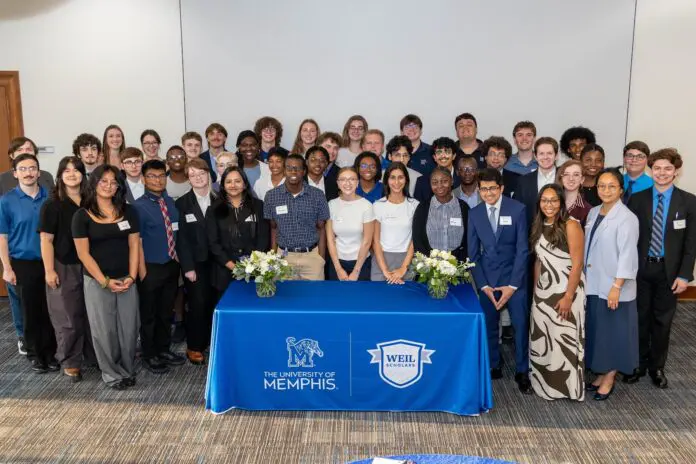
For Eleanore “Elle” Wiggins, a future in Memphis has never been difficult to imagine.
Born and raised in the city, Wiggins earned her bachelor’s degree in legal studies from the University of Memphis before continuing her education at the Cecil C. Humphreys School of Law. Now entering her second year of law school, she is exploring careers in civil rights, environmental and employment law. She is most interested in a path that allows her to advocate for the communities she has known her entire life.
“As time went on, I realized how much I loved Memphis and how much I’ve loved giving back to the communities that I’ve been in,” Wiggins said.
That desire to build a life of service in Memphis makes Wiggins exactly the kind of student at the heart of the Weil Scholars Program.
Established through the generosity and vision of Memphis businessman and philanthropist Burton Weil, the program was created around a simple but ambitious idea of his: Invest in talented students, give them the support and experiences to become successful leaders and their success will ultimately strengthen the city around them.
Today, that vision is taking shape across the University.
From the beginning, Weil’s vision for the Weil Scholars was to create a program that offered more than financial assistance.
The program identifies high-performing students across academic disciplines and surrounds them with an ecosystem of mentorship, professional development, experiential learning and connection. Scholars participate in cohort events with fellow scholars in their majors, engage with leaders and professionals in their fields and receive opportunities designed to help them translate academic achievement into meaningful lives and careers.
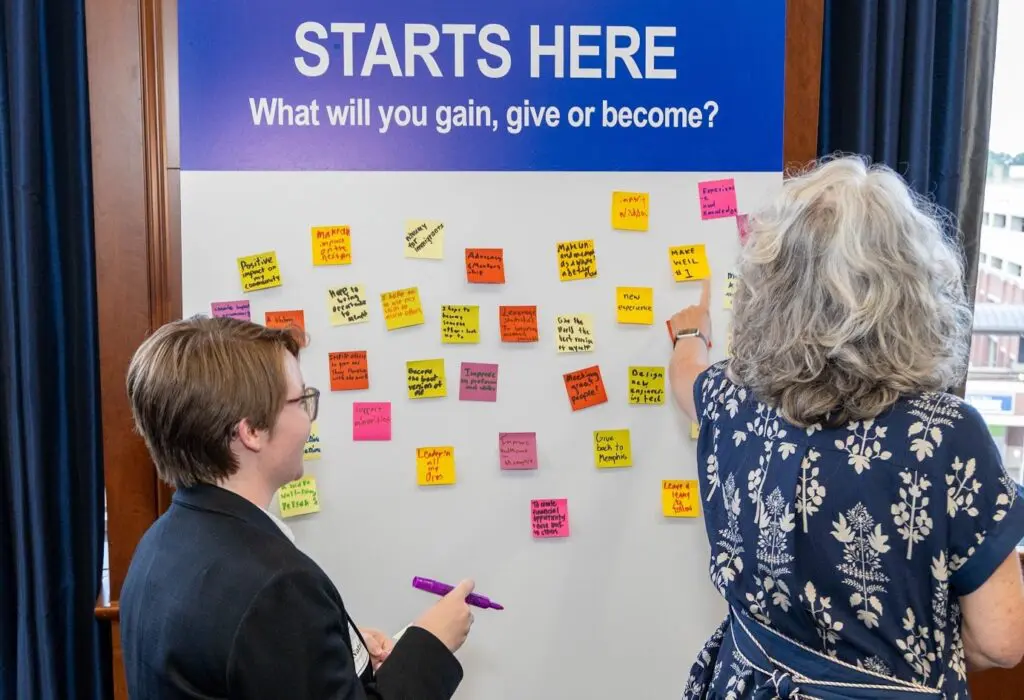
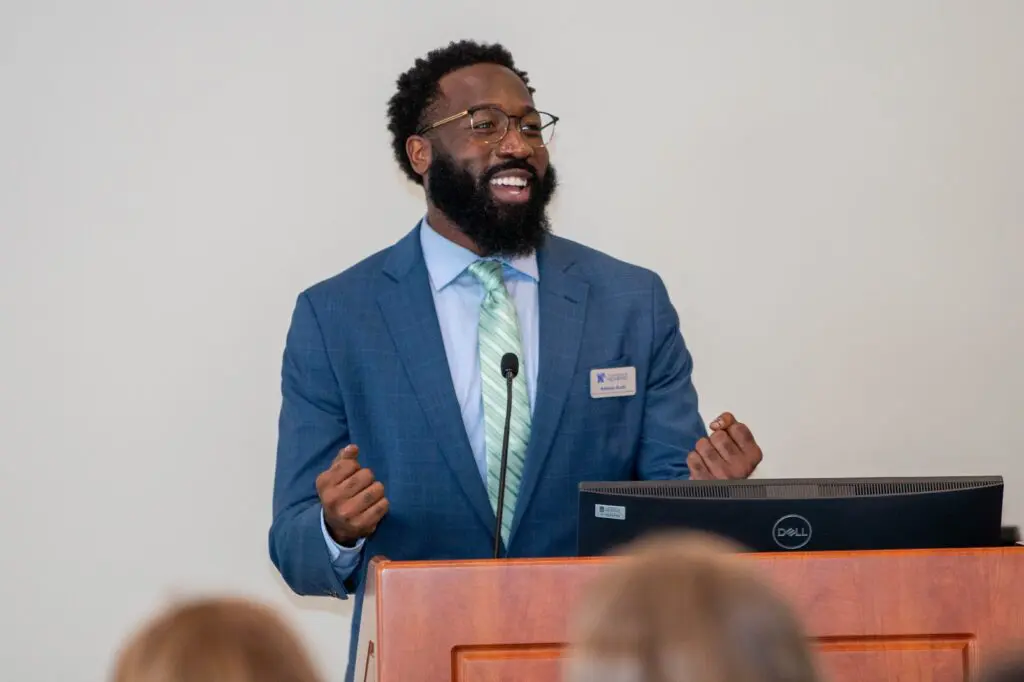
For Antonio Scott, director of the Weil Scholars Program, that successful transition into a career is fundamental.
“The Weil Scholars Program is not a traditional scholarship. It’s not a traditional application process,” Scott said.
Students do not simply apply and receive an award. Potential scholars are identified through nominations from across the University and community, with academic achievement representing only part of what program leaders are looking for.
“Our students are chosen. They’re chosen to be a part of this program,” Scott said. “And the next step is building them to transform.”
That philosophy closely reflects Weil’s original vision. His investment was designed to help promising students earn degrees but also to encourage talented young people to build successful lives in Memphis and contribute their skills, ideas and leadership to the city.
“We don’t want scholars just to come learn, lead and leave a legacy at the University of Memphis,” Scott said. “We want them to be able to contribute more wholly to the city of Memphis.”
As the program grows and planning for the future begins, Scott is focused on establishing a culture that can carry that vision forward.
That means creating opportunities for scholars to form relationships with one another, connect with mentors, explore Memphis and understand how their individual talents can make a difference.
“Culture is one of the most important precursors for success,” Scott said. “If our students are not experiencing community and belonging, they’re not going to be a successful student.”
It also means being intentional about what students take away from each opportunity.
“Students are not transformed simply by having experiences,” Scott said. “I’m a believer that students are transformed by the meaning they take from those experiences.”
That philosophy is shaping new programming, including a “Memphis as Classroom” series designed to connect scholars with the city’s history, industries and leaders. Scott also envisions expanding recruitment efforts, building stronger connections with local schools and community organizations and developing experiences that help scholars see Memphis as a place where they can build meaningful careers.
“I want our programming to be about how great Memphis is and how much Memphis needs you to stay,” Scott said.
For Wiggins, those ideas are already becoming tangible.
Wiggins first learned she had been selected as a Weil Scholar a few weeks into her first year of law school.
She had already received other scholarship support, but the remaining cost of law school weighed heavily on her. She had prepared financially, but every decision carried the question of how spending money today might affect her future.
Then she received a call from the law school’s admissions and financial aid office.
She had received another scholarship, and along with it, an acceptance into the Weil Scholars Program.
Wiggins later attended her first Weil Scholars event, a welcome banquet where she met Weil and the other students who would become part of her new community.
“I felt like there was a community that I could see myself being a part of,” Wiggins said. “And so it meant a lot to me, of course, because financial freedom, but also because that’s such a strong community that I’m so honored to be a part of every day.”
The financial impact was significant.
“It helped a lot to be less worried about what my finances allowed me [to do] and allowed me to refocus on school and my engagement with school,” she said.
With some of that financial pressure lifted, Wiggins began saying yes to more of the opportunities around her.
She became involved with the Student Bar Association and organizations focused on environmental law and women in the legal profession. She found places where she could contribute, lead and build relationships. Now, she is preparing to serve as a peer mentor for incoming law students.
Just as importantly, the Weil Scholars community has placed Wiggins alongside a cohort of students whose ambition challenges her to recognize her own.
“It helps me be able to be more focused on school as well as not just the academics of school, but also the community of school,” Wiggins said. “It’s just so awe-inspiring being surrounded by such smart and intelligent people, because they’re so passionate about their journeys, no matter where in their journey they are,” she continued. “And so that’s been so inspiring for me but also pushes me to achieve better.”
For Scott, stories like Wiggins’ demonstrate what the Weil Scholars Program can become.
The goal is not simply to graduate talented students. It is to help those students understand their own potential, build meaningful connections and see a future for themselves in the city where they studied.
“The city cannot operate and thrive without the University,” Scott said. “And that relationship truly is vice versa.”
That relationship is central to the future of the program. As Scott looks ahead, he sees opportunities to reach promising students earlier, deepen connections with Memphis organizations and businesses and create experiences that connect scholars’ academic interests with the needs of the city.
“We’re looking at the long-term transformation and thriving of the city of Memphis,” Scott said.
Wiggins is already beginning to demonstrate what that transformation can look like.
Her interests in civil rights, environmental law and employment law all share a common theme: advocacy. Even before earning her law degree, she is using the freedom created by her scholarship to mentor other students, participate in organizations and find new ways to contribute to the community around her.
For Wiggins, the impact of the program is difficult to separate into dollars, experiences or relationships because each has reinforced the others.
“It’s so hard to sum it up because there’s so much that I’m just so grateful for,” she said. “It’s a lot of money, but it’s also a lot of community and it’s a lot of trust in me.”
That trust may ultimately be one of Weil’s most enduring investments.
His vision begins with identifying talented students and giving them the resources to succeed. Those students can become attorneys, educators, entrepreneurs, researchers and community leaders whose success creates new possibilities for Memphis.
Wiggins is one scholar at the beginning of that journey. More will follow.
“Our students are chosen to lead and built to transform,” Scott said.
Through the Weil Scholars Program, that transformation begins with students. Its potential belongs to an entire city.
Lorem ipsum dolor sit amet, consectetur adipiscing elit, sed do eiusmod tempor incididunt ut labore et dolore magna aliqua. Ut enim ad minim veniam, quis nostrud exercitation ullamco laboris nisi ut aliquip ex ea commodo consequat. Duis aute irure dolor in reprehenderit in voluptate velit esse cillum dolore eu fugiat nulla pariatur. Excepteur sint occaecat cupidatat non proident, sunt in culpa qui officia deserunt mollit anim id est laborum.
Lorem ipsum dolor sit amet, consectetur adipiscing elit, sed do eiusmod tempor incididunt ut labore et dolore magna aliqua. Ut enim ad minim veniam, quis nostrud exercitation ullamco laboris nisi ut aliquip ex ea commodo consequat. Duis aute irure dolor in reprehenderit in voluptate velit esse cillum dolore eu fugiat nulla pariatur. Excepteur sint occaecat cupidatat non proident, sunt in culpa qui officia deserunt mollit anim id est laborum.
aboris nisi ut aliquip ex ea commodo consequat
Lorem ipsum dolor sit amet, consectetur adipiscing elit, sed do eiusmod tempor incididunt ut labore et dolore magna aliqua. Ut enim ad minim veniam, quis nostrud exercitation ullamco laboris nisi ut aliquip ex ea commodo consequat. Duis aute irure dolor in reprehenderit in voluptate velit esse cillum dolore eu fugiat nulla pariatur. Excepteur sint occaecat cupidatat non proident, sunt in culpa qui officia deserunt mollit anim id est laborum.