

Rediscovering the Greater Chestnut Weevil
University of Memphis PhD candidate Michael Charles originally wanted to become a veterinarian. Little did he know that switching to the field of biology and entomology would lead him to rediscovering the greater chestnut weevil, a species of beetle that was believed to have gone extinct with the near extinction of the American chestnut tree due to introduced plant pathogens in the early 20th century. According to Charles, the last known chestnut weevil had not been seen since 1997.
“When I was looking into veterinary school, I was unaware that they wanted you to have 1,000 hours of shadowing. I knew I was not going to be able to do that without being paid. My brother at the time was doing his PhD in the Chemistry Department at the UofM, so I thought I could do that,” Charles said. “I’d always been interested in biology and evolution, and I knew I wanted to do something with phylogenetic trees.”
Phylogenetic trees are visual representation often using diagrams that show the evolutionary relationship between organisms. A key component in the integrated studies of insect systematics, genomics, evolution and diversity in the McKenna Lab, led by Dr. Duane McKenna, professor in the Department of Biological Sciences and director of the University of Memphis Center for Biodiversity Research (CBio).
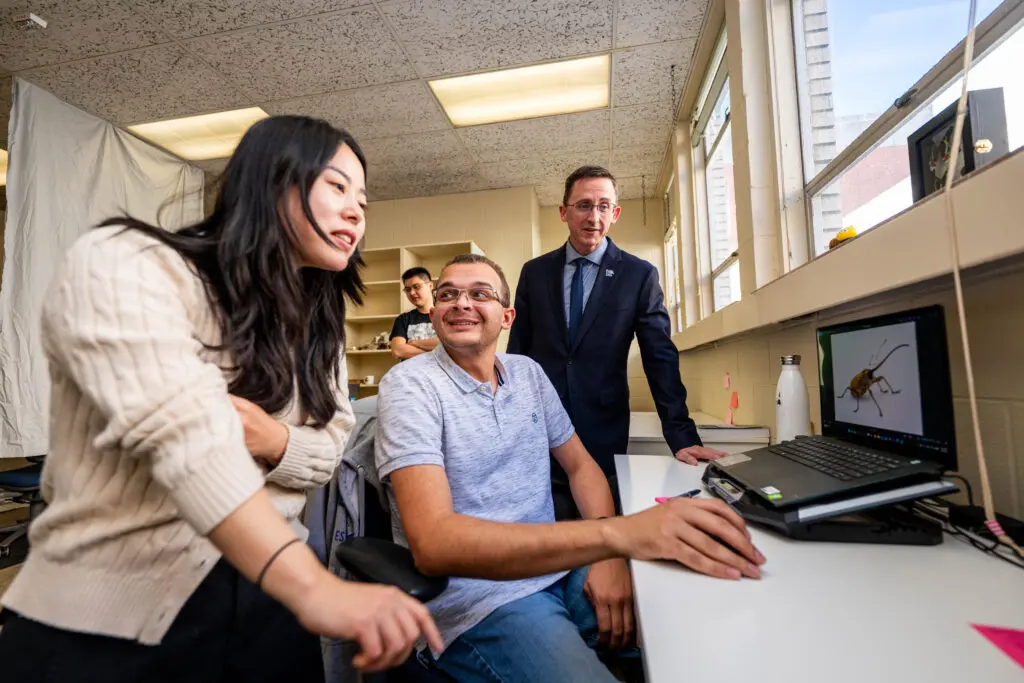
A professor introduced him to McKenna as an undergraduate, and Charles began working in the lab in 2016. McKenna later became his advisor, and he’s been in the lab conducting research ever since.
“During my undergrad, I worked on DNA extractions, specimen imaging, specimen organization, which is everything I do now for my research as a doctoral student, and I enjoyed it. And to be honest, I was good at it,” Charles said. This gave him the confidence that a career in this field was the right choice.
Charles said what fascinates him the most about the field is the sheer biodiversity of all the insects in the world. “The genus I study alone has potentially 500 species, the family of weevils has an estimated 60,00 species, with many more that have yet to be described. There’s no shortage of things to do.”
After cataloging different specimens, Charles’ attention to detail of the many distinctions of weevil species grew over the years.
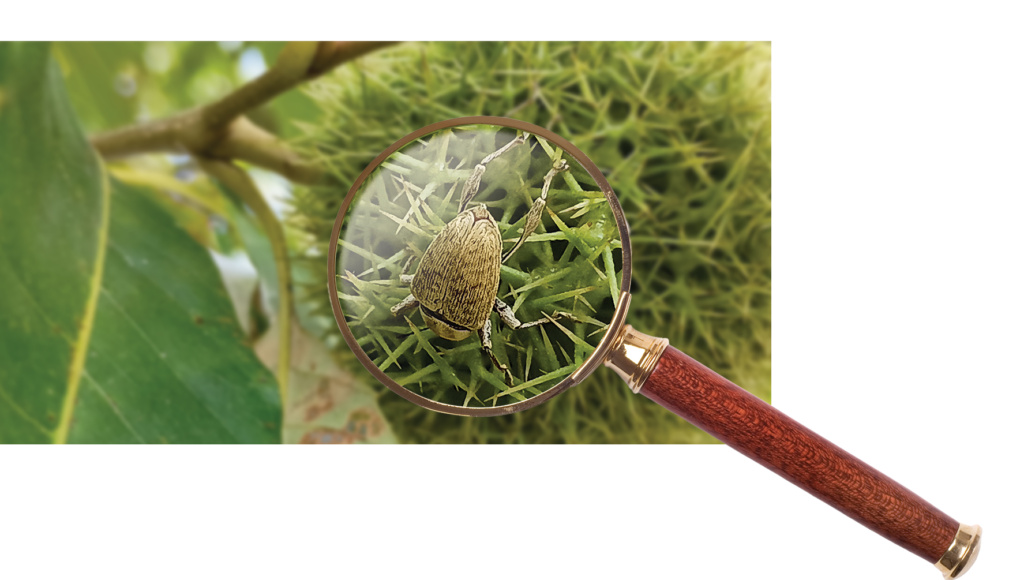
McKenna and Charles were prompted to conduct research on the greater chestnut weevil after they noticed a few photos on iNaturalist — an online platform where anyone can post photos of plants and animals. The image they found closely resembled the greater chestnut weevil which has extraordinarily long mouthparts — longer than its body — which are used to drill into chestnuts for feeding and egg-laying and a distinct second antennal segment much longer than the first.
“Based off the photos, I ran down to Dr. McKenna’s office and showed him. We both looked at it, scrutinized it and couldn’t really find anything to tell us that that wasn’t it.”
Charles then contacted the person who posted the photo to learn more about the location.
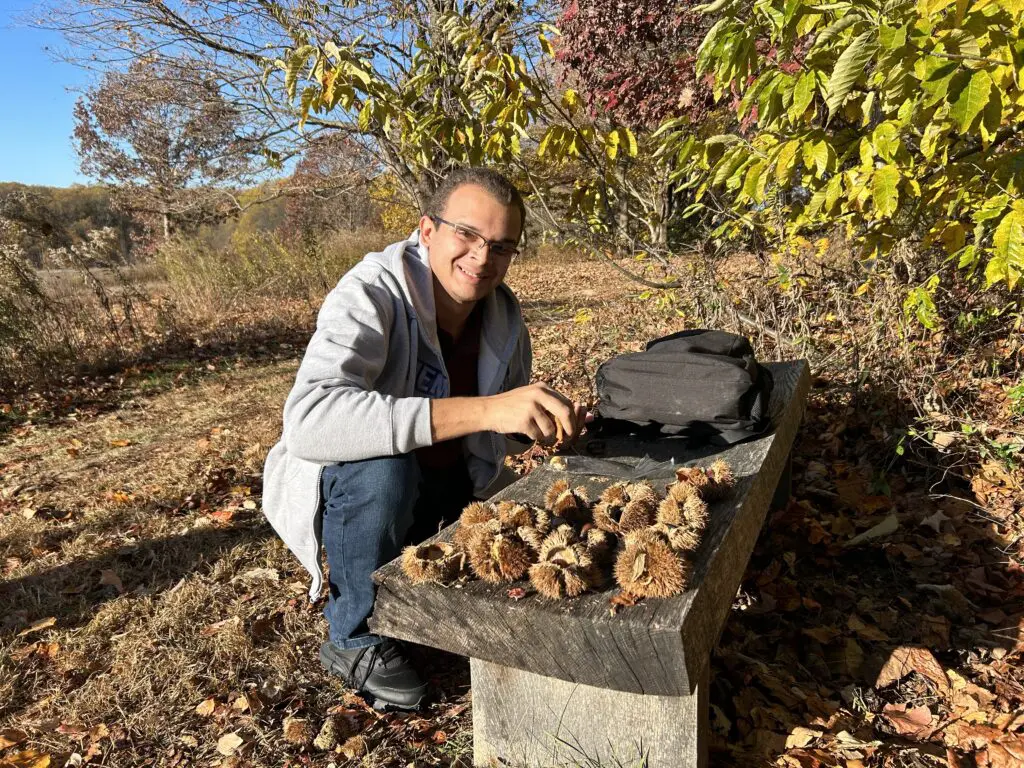
He would later conduct fieldwork in Virginia and Pennsylvania, where he collected weevil larvae he found exiting chestnuts he collected. He brought the samples back to the McKenna Lab where they sequenced the DNA for comparison to historical museum specimens from the Florida State Collection of Arthropods and North Carolina State of the long-lost species. He and McKenna later used these and other data to confirm that the beetle was, in fact, not extinct.
With technology on his side, Charles looked online for more images of the possible chestnut weevil and found another image on Facebook posted by the American Chestnut Foundation’s Meadowview Research Farm in Meadowview, Va.
After contacting them, Charles was on his way to Virginia.
“I was on this cherry picker, and something just told me to move this one particular leaf and right there, right behind it was the weevil,” Chares said. “I just kind of stared at it for a couple of seconds, like just awestruck. And then I realized, I need to grab this and put it into a vial.”
With permission from the research farm, Charles brought live specimens back to Memphis.
Charles joked that when he came home saying, “My parents looked at me like I was crazy, because growing up, I wasn’t the kid that was outside playing in the dirt, they were dumbfounded and were like, ‘Why are you bringing insects into the house? We’re asking you to get them out and you brought them inside, what are you doing?’” He said his brother who holds a PhD told him, “This is easily better than anything I ever did.”
Charles, McKenna and others have reported the rediscovery and associated research in Current Biology, a leading life sciences journal. The project highlights the University of Memphis’s expanding strengths in biodiversity science and genomics. Support from the Center for Biodiversity Research and the Department of Biological Sciences made the fieldwork and graduate training possible, with additional National Science Foundation funding to McKenna enabling the genomic analyses.
“For decades, the greater chestnut weevil was considered a classic example of coextinction — the loss of dependent species due to the decline of their hosts,” said McKenna. “Its rediscovery is a rare piece of good news in the broader biodiversity crisis, and a reminder that we have only a brief window to find and protect species that are quietly slipping toward extinction. What made this rediscovery especially exciting is that it combined old-fashioned fieldwork with modern tools, including genetic data that helped confirm the weevil’s identity.”
Charles remarked that the discovery owed its success to broad scientific collaboration.
“This rediscovery wouldn’t have been possible without the observations of volunteers and the digital tools that connect their data to scientists,” Charles said. “I’ve been working on finding this weevil for a while, but without the other people and citizen community scientists that post these images and everything, it really is a group effort. It’s really community science, if you will.”
Charles hopes to continue his research on the greater chestnut weevil with plans to graduate December 2026.