

From Memphis to Sicily, my research asks a simple but powerful question: what does it mean for people to have a voice in shaping their communities?
I’m a professor of Anthropology at the University of Memphis, and my work focuses on community engagement in development — how citizens organize, participate and collaborate with local institutions to make decisions about housing, food access, public spaces and more. Whether I’m working here in Memphis or abroad in Sicily, the goal is the same: to understand how communities can take an active role in shaping their own futures.
Research With Communities
In anthropology, we call this an “engaged” approach. That means I work alongside community members to help design the research, carry it out and share the results.
It’s a collaborative effort that leads to outcomes. In South Memphis, for example, our work helped to support the Works, Inc. in the creation of a local farmers market in an area with limited access to fresh food. That effort ultimately led the Works to develop a neighborhood grocery store, cooking programs and expanded services for seniors, including meal delivery during COVID.
In Sicily, similar partnerships with Trame di Quartiere, Antudo Lentini, and the Participatory Presidium of the Simeto River Pact have helped community organizations secure more than $300,000 in funding to support their own locally designed initiatives. Across every project, the focus is on building capacity in local communities to identify challenges, access resources and create solutions that fit their needs.
Solving Real Problems in Memphis
Much of my current work is rooted right here in Memphis. Over the last year, I have collaborated with students and community partners to think about how we can make public spaces more inclusive and accessible in the Medical District.
Medical District Park is a space used by a wide range of people — students, hospital staff, residents and unhoused individuals — and we’re asking: how can this park better serve everyone? That means listening to stakeholders, understanding competing needs and helping design solutions that reflect the full community.
This kind of research touches every part of city life because it helps communities make informed decisions that improve daily living.
Building the Next Generation of Community Researchers
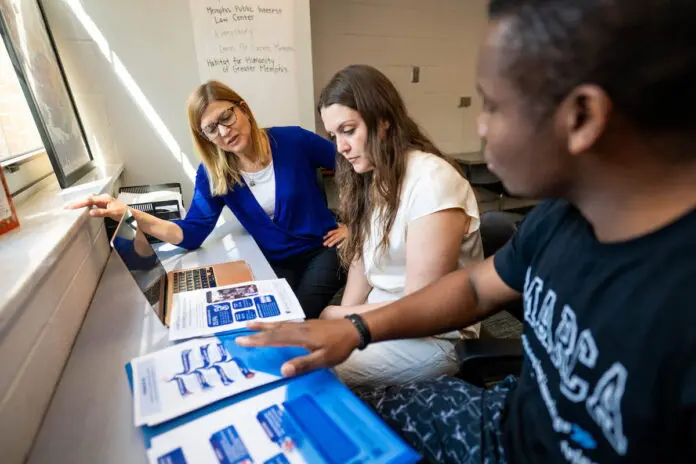
A big part of this work happens through MARCA — the Memphis Applied Research and Community Action Institute, which we launched in 2026. It brings together faculty and students from across disciplines to partner with local organizations on real-world challenges.
Through initiatives like “Ask MARCA,” nonprofits can come directly to us with questions, whether they need data, analysis or help designing a project. Students then work alongside these organizations, gaining hands-on experience while contributing meaningful research.
We’re also tackling large-scale issues, like studying affordable housing through the city’s State of Housing report and examining the impact of data centers in the Mid-South. Every project is rooted in collaboration and designed to support the community.
Why It Matters
What excites me most is the ability to create meaningful connection through building relationships, understanding people’s lived experiences and working together toward solutions.
I see it in my students, too. They bring their own experiences, their own knowledge of Memphis and you can watch the moment it clicks — when they realize they can contribute to their city in a meaningful way.
At its core, this research is about action. It’s about making sure communities are active participants in their own change, as opposed to merely being subjected to it.
Research in a Minute is part of a series from the University of Memphis showcasing the innovative research being done by our faculty.