

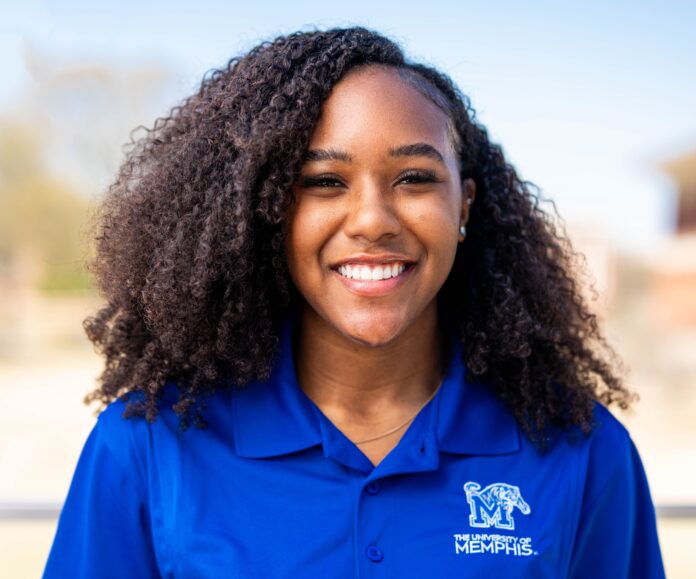
Student Spotlight: Eryana Stringfellow
I was in third grade when the world’s attention suddenly came to my neighborhood.
We lived a street over from Michael Brown in Ferguson. After he was killed, my school shut down because there wasn’t a safe way to get there. There were protests, fires, looting and chanting outside. For about two weeks, my brothers, sisters and I slept in my parents’ room because everything outside was so loud.
I was scared, but I was also curious. I remember begging my parents to let me look out the window. I kept asking questions. My parents explained what had happened in a way a third grader could understand, and I remember wanting to go to a protest. My mom told me it wasn’t safe, but that I could still learn and support people from home.
At that age, I didn’t have words like activism or racial disparities. I just saw a community heartbroken over someone who had died, and I saw people come together and stand up for him.
I understand now how much that stayed with me.
Growing Up Through Change
Change was already a normal part of my childhood. St. Louis was home because my family was there, but my immediate family moved a lot. I lived in Chicago, Arizona, Kansas City and other counties in St. Louis.
My parents divorced when I was in fifth grade, and my mom raised my younger sisters and me in a single-mother household in St. Louis. I have two older brothers and three younger sisters, plus this huge extended family of grandparents, aunts and uncles who have always supported me, prayed for me and reminded me that I wasn’t alone.
Moving actually made me more outgoing. I learned that I could walk into a new school, talk to people and make friends. I loved school. I was the kid who was always eager to answer questions.
When I returned to St. Louis after Arizona, I attended a lower-income middle school with a lot happening around us — fighting, gang violence and kids dealing with difficult situations at home. But I also had teachers and administrators who genuinely cared. They didn’t write kids off. They poured into us and kept telling us that a high school diploma and college were possible.
That was important to me because I wanted something bigger, even before I knew how I was going to reach it.
When I Forgot My Dreams
In seventh and eighth grade, a college-prep class made college feel realistic. My teacher, Ms. Nia Smith, taught us about tuition, scholarships, HBCUs and PWIs and took us on college visits within Missouri.
Then COVID happened.
My freshman year of high school was at home, and I hated it. I had always played sports, talked to everybody and loved being around people. Suddenly, I was stuck inside.
Sophomore year, my family moved to Arizona to support my brother as he pursued his opportunity to become a Division I football player. I went to two in-person schools, but my health kept getting in the way. I had COVID twice, then pneumonia and my asthma flared up. Eventually, I returned to online school. After nearly two years without consistently being around people, I developed some social anxiety.
College stopped feeling important. I was just trying to graduate.
I describe it now by saying I forgot who I was during COVID. I forgot those big dreams I had as a kid.
Coming back to St. Louis junior year started changing that. At Lutheran North, I returned to sports, found community again and started remembering the driven, involved person I had been.
Bringing the Dream Back to Life
By senior year, college was real again, but as a first-generation student, I knew finances were important.
My college-prep counselor, Khadijah Tejan, helped me turn the dream into a plan. I would finish my half-day of classes around 10 a.m., sit in her office and apply for scholarships for hours. By graduation, I had applied for around 25 and received about eight. I didn’t want pursuing college to put my family under financial strain.
Memphis wasn’t originally some lifelong dream. I hadn’t even heard of the University until my godsister told me she attended. My grandmother encouraged me to apply. Then I was accepted and was offered a scholarship, and suddenly Memphis became very real to me.
My mom, grandma and I visited campus in April. Eventually, my decision came down to North Carolina A&T and the University of Memphis.
Memphis made sense. It was far enough from St. Louis for me to gain independence but close enough to stay connected to my family. I loved my campus tour, my godsister would become my roommate and the scholarships made the difference.
I came here to earn a degree.
But I didn’t realize that the University of Memphis would also help me rediscover my purpose.
Pouring Into Other People
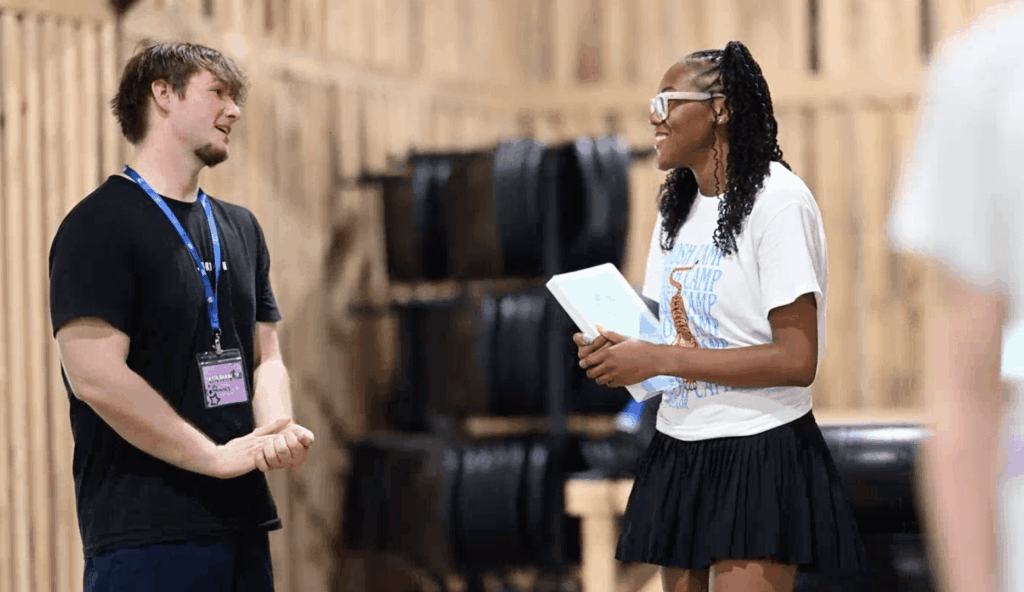
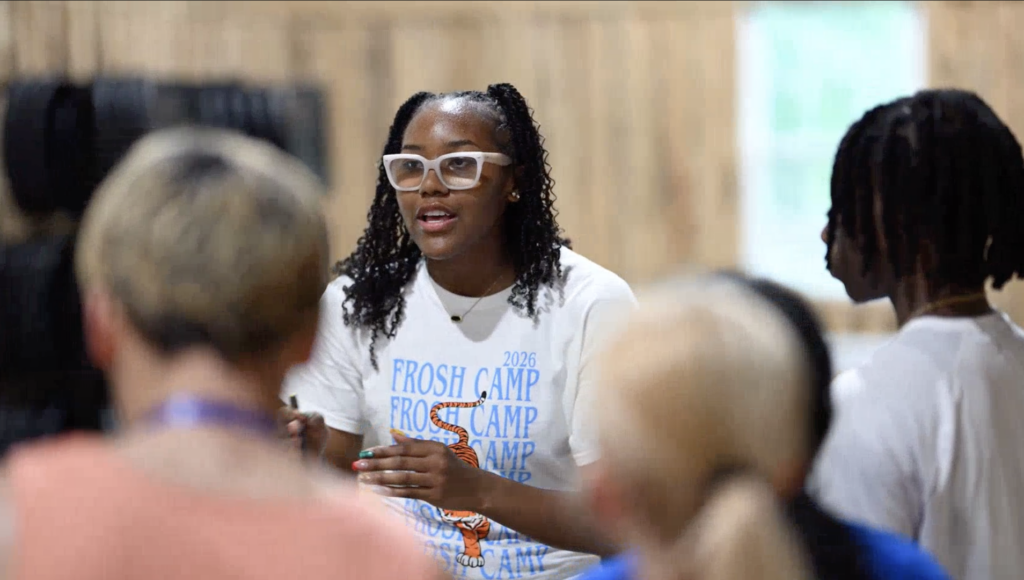
A scholarship to attend Frosh Camp helped start that process. Moving out of state was expensive, and I didn’t want to. My mom reached out to Frosh Camp Advisor, Matty Bailey, after we missed the scholarship deadline, and the program found a way to cover me.
Frosh Camp became my turning point.
I met people, learned about campus and started thinking: I want to be a student leader. I want to pour what I’ve learned into first-generation students, Black women and anybody else who might need someone. Those childhood dreams started coming back.
That purpose has carried me into campus involvement and into my academic path. I’m now pursuing an accelerated bachelor’s and master’s path in sociology with psychology and social justice minors on the pre-law track. In a racial and ethnic minorities class in the spring semester of my freshman year, we watched a documentary about Michael Brown. Suddenly I was that third grader again — remembering school closing, the noise outside and my community standing together.
It helped me understand the connection.
That little girl who couldn’t stop asking “why” is part of why I want to become an attorney; she’s part of why social justice matters to me.
The University of Memphis has given me scholarships, resources, friendships, leadership opportunities and even a church community that feels like family. It has become another home.
I could keep growing into who I was destined to become.