

In 2024, the Ned R. McWherter Library celebrated its 30th anniversary, offering an opportunity to reflect on its history, contributions and evolving role in the UofM’s academic landscape as part of the University Libraries.
Dr. Kenneth Haggerty, associate dean for Innovation and Scholarly Engagement of the University Libraries said, “McWherter Library’s 30 years at the University of Memphis marks a testament to the University Libraries’ unwavering commitment to supporting the learning, teaching and research needs of the University of Memphis community and beyond.”
When its doors opened on Sept. 1, 1994, nearly two years after breaking ground and surviving the devastating 1994 ice storm, McWherter Library was a long-awaited and much-needed upgrade to the University’s library system.
Named after former Tennessee Governor Ned Ray McWherter, who played a pivotal role in securing funding for the project, McWherter Library became a cornerstone of academic and campus life.
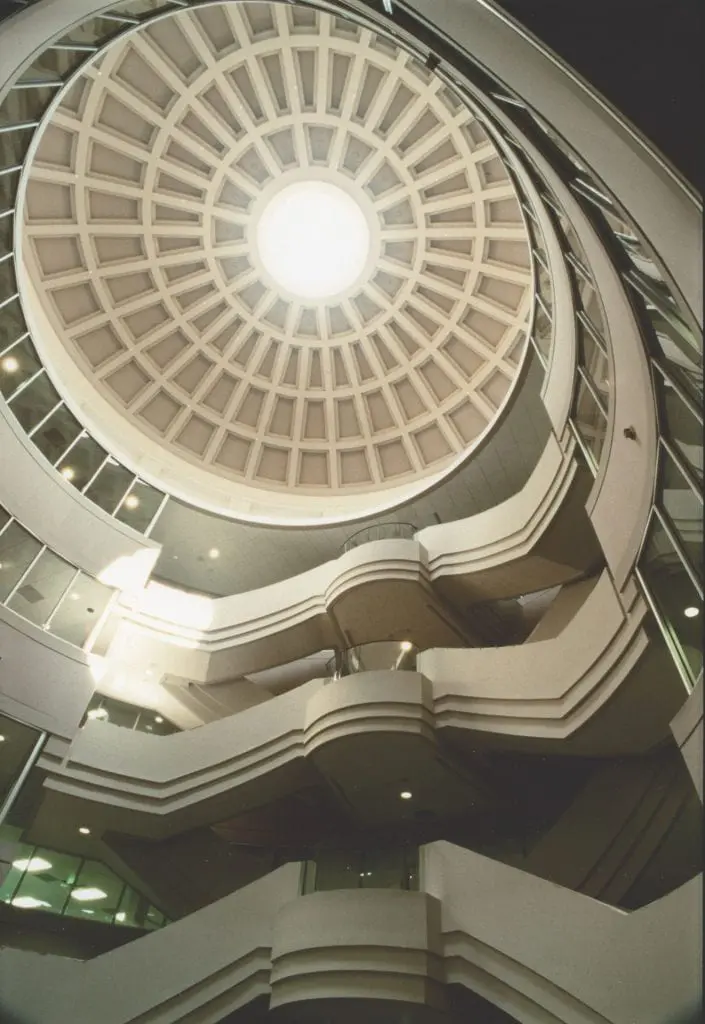
The building’s architecture, with its two-story four-columned entrance, domed rotunda with an oculus and granite flooring, and study spaces featuring natural light, was designed to inspire imagination, learning and collaboration. Its four floors of 360,000 square feet housed an extensive collection of books, journals and research materials while offering abundant spaces for study, group work and emerging technology.

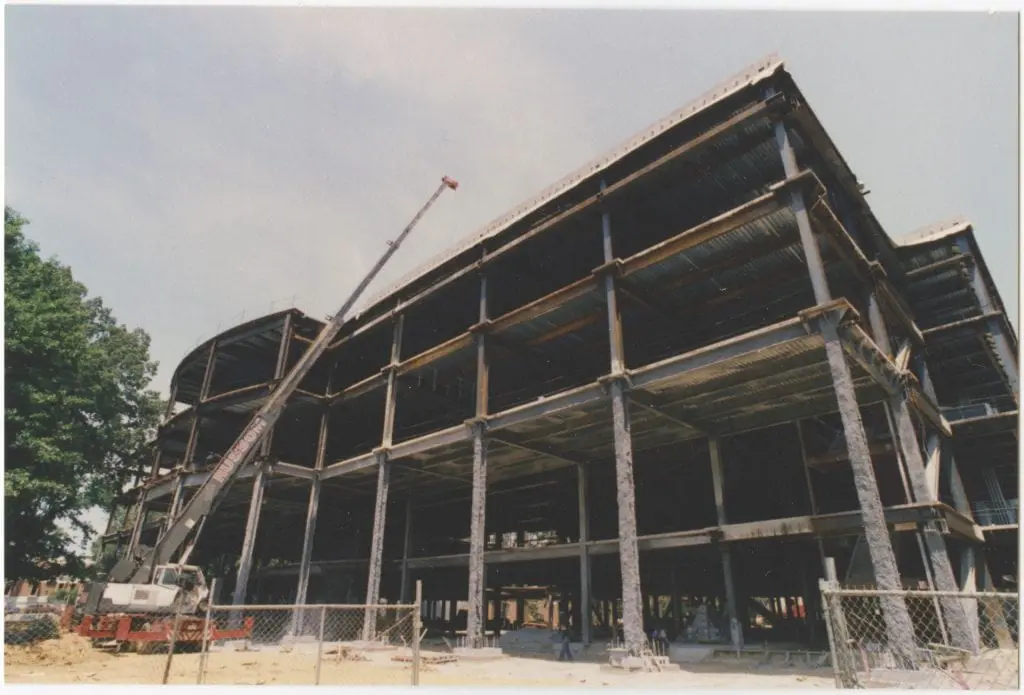
Long-time Government Publications Department employee Betsy Eckert said the opening of McWherter Library “was an exciting time — new building, new furniture and more space but it also came with the challenges and anticipation of learning and being a part of a new era with computers and the World Wide Web.”
For those who remember card catalogs and microfiche, it’s no secret that the internet has redefined how libraries operate.
In 1994, McWherter offered the most current technology and resources, and as the years have passed, the library has kept pace by incorporating the latest tools available to academic libraries. Today, its digital collections feature thousands of databases, e-books, and academic journals, available to UofM students and faculty worldwide. A more recent addition is an online digital repository, the Digital Commons, accessible to anyone anywhere.
McWherter now offers computers on every floor, printers, scanners, Wi-Fi and creative production studios, as well as online services and resources, underscoring its commitment to integrating technology into the academic experience and serving students and faculty.
More recently, McWherter established a creator space and creative production studios. In the fall of 2019, the sandbox. — a maker/creator space opened — featuring 3D printers, a Glowforge laser cutter, a Cricut (smart cutting machine) and a computer lab featuring Adobe Creative Cloud software. Workshops and orientations are held regularly to support students and faculty in their academic endeavors. The production rooms include a podcast studio, a recording studio, a video recording studio and a practice presentation space.
Two of McWherter’s departments help the library stand above a typical academic library and reach beyond the campus, Special Collections and Government Publications.
Special Collections houses rare books, manuscripts and archives, offering a glimpse into the storied history of the University, the City of Memphis and the Mid-South. It receives requests from all over the world due to its unique holdings.
Government Publications provides online and public access to federal and state government information as a Federal Regional Depository Library for the State of Tennessee and a depository for Tennessee state documents.
As McWherter Library embarks on its 31st year, Dr. Gerald Chaudron, the executive director of the University Libraries said, “Since its modest beginnings as a room in the Administration Building, the University Libraries has been the information hub of the campus.
It currently serves thousands of students and faculty in ways unimaginable back in 1912 when the University was founded. The University Libraries continues to evolve as the technology of knowledge changes and expands to provide the best experience to all its stakeholders.”
McWherter Library embodies the values of the University of Memphis: student success, service, innovation, knowledge discovery and dissemination and commitment to collaboration and accountability.
To learn more about the University Libraries as well as McWherter Library, visit memphis.edu/libraries.
The department also maintains the University Heritage Room in Brister Hall, the original library, built in 1927. To donate items, call Special Collections at 901.678.2210 or email: specialcollections@memphis.edu.