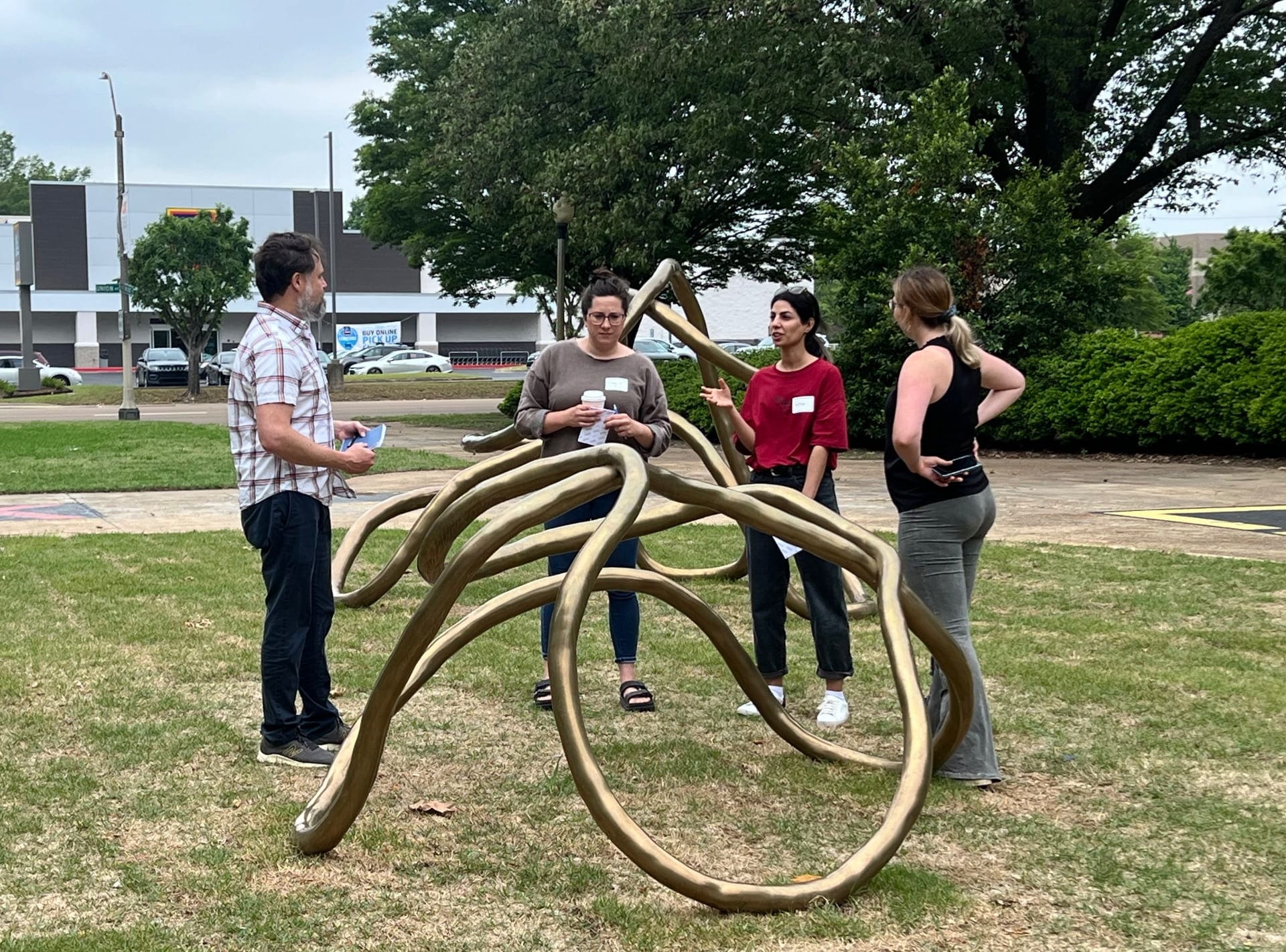
Through a collective effort between the University of Memphis School of Urban Affairs and Public Policy, the Department of City and Regional Planning, and the Memphis Medical District Collaborative (MMDC), Medical District Park has a vibrant future on the horizon from its storied past.
“We are excited about the ability to bring together a pool of diverse stakeholders to offer input into making Medical District Park an integral place to live, work, learn and play.” Kirkwood Vangeli, MMDC Streets and Public Spaces manager said. “It has been a pleasure working with the University of Memphis on research, brainstorming and project development that is informing the park’s master plan. Given the history of the location, it brings us great joy to breathe new life into this public space that often gets overlooked.”
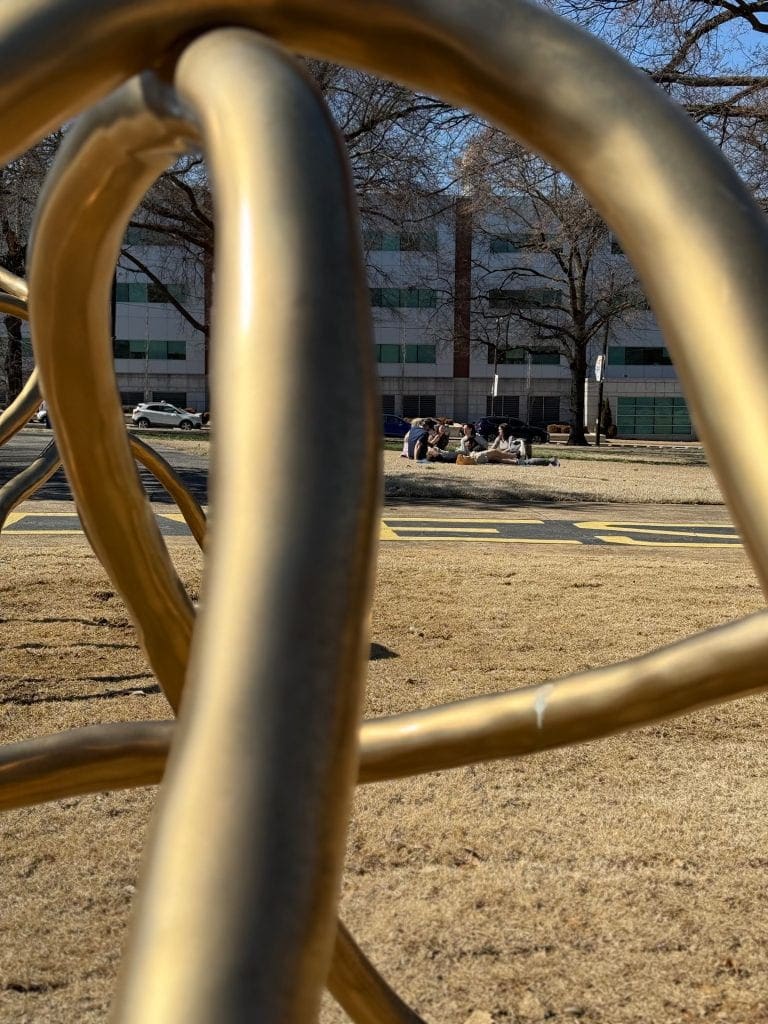
Opened in 1899 as Forrest Park, the 10-acre park that sits in the heart of the Medical District was later renamed Health Sciences Park in 2013, and in January 2025, became Medical District Park. In the years leading up to its renaming, the park became the focus of debate over the statue of Confederate General Nathan Bedford Forrest, with views differing on historical commemoration and the role of public spaces. That debate eventually led to the statue’s removal and a redefinition of the park’s identity.
Students from the UofM Master of City and Regional Planning and PhD in Urban Affairs programs reimagined what the park could become, which began as a design competition last April. This was followed by a planning studio course and a collaborative urban problem-solving course in the fall. Through guidance from professors on how to identify, analyze and develop ideas, students were able to address the needs of the park and the surrounding community.
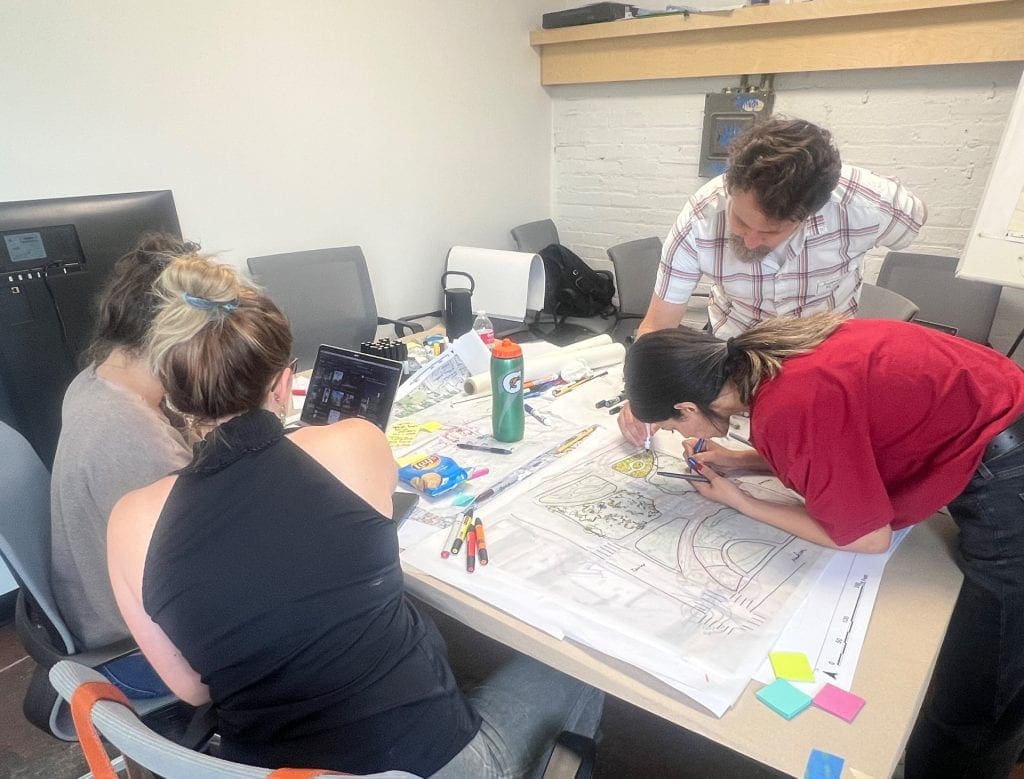
“This is a very specific way of introducing students to the world of participatory design and community engaged research,” said Margaret Grace Haltom, visiting assistant professor in the Department of City and Regional Planning. “The goal is not as urban planners or landscape designers to drop a design onto a space, but actually to learn from community perspectives, to learn how residents and students currently walk through the space, and how do people use the space today and what do they envision for that space in the future.”
Research ranged from gathering surveys on mobility, walkability, parking, safety, park management and addressing park amenities such as restrooms and playgrounds. Students were able to learn and document the process through deep listening and deep observations according to Haltom. The importance of community engagement in urban planning and design is at the core of the park’s future transformation.
UofM student Ali Burton said, “Being part of the Medical District Park planning project has been an eye-opening and deeply rewarding experience. It gave me a front-row seat to the thoughtful process behind creating a master plan — where every detail matters. What stood out most was engaging directly with the community, hearing their hopes and seeing those ideas shape the vision for a space that truly belongs to them. Contributing to a project that connects the heart of Memphis to a place with such a complex history feels meaningful. It’s inspiring to see MMDC’s commitment to creating vibrant pockets of joy in a district known for its demanding healthcare environment, and I’m proud to have played a small role in that transformation.”
Students presented their findings to MMDC using a variety of visuals, maps, and even following fictional residents through their journey’s using the park throughout their lifespan.
The course continues for PhD students where they will conduct their research on topics which range from housing stability in the neighborhood, inclusive management of the park, activation of the park in relation to surrounding parks and addressing safety for all individuals using the park, including the unhoused. PhD students will present their completed research study and data analysis this spring to a public forum.
Through this work, the project aims to transform the park from community pass-through into a more vibrant, community-engaged space while balancing and not ignoring its historical impact, incorporating the park’s future to more modern needs. The project aligns with MMDC’s mission to create a vibrant, safe and equitable Medical District.
Stephen Kofi Diko, PhD, assistant professor in the Department of City and Regional Planning said, “What I hope my students take away from this project is that tackling community challenges is a multifaceted process that can be both rewarding and fulfilling. By engaging in this work, they become active participants in driving real and positive changes within communities. I want them to appreciate that the communities planners often work with have significant histories, often difficult ones, that have shaped their current outcomes and challenges. Effective planning acknowledges this history and envisions a future alongside community members, addressing immediate challenges while also engaging with the community’s history to foster a partnership in building a better tomorrow.”
Those involved with the project wanted to reinforce the significance and appreciation of the park’s access to nature and restoration of outdoor spaces. And according to Diko this is “essential infrastructure for the healing and well-being of residents and visitors.”
“The departments in the School of Urban Affairs and Public Policy have a commitment to breaking down the walls between the institution and the community,” said Katherine Lambert-Pennington, PhD, director of the School of Urban Affairs and Public Policy and professor in the Department of Anthropology. “We’re a major employer and educator for many Memphians. Part of our role is to bring knowledge and resources and work with the community — the ivory tower is not where problems get solved. It’s on the ground. To find a solution that can be practiced and works. Students today want to know that they can make a difference in the world.”
Kirkwood said he hopes that ultimately, the park becomes a destination for residents, students, professionals, tourists, government officials, advocates and whoever else needs a space for reprieve.