

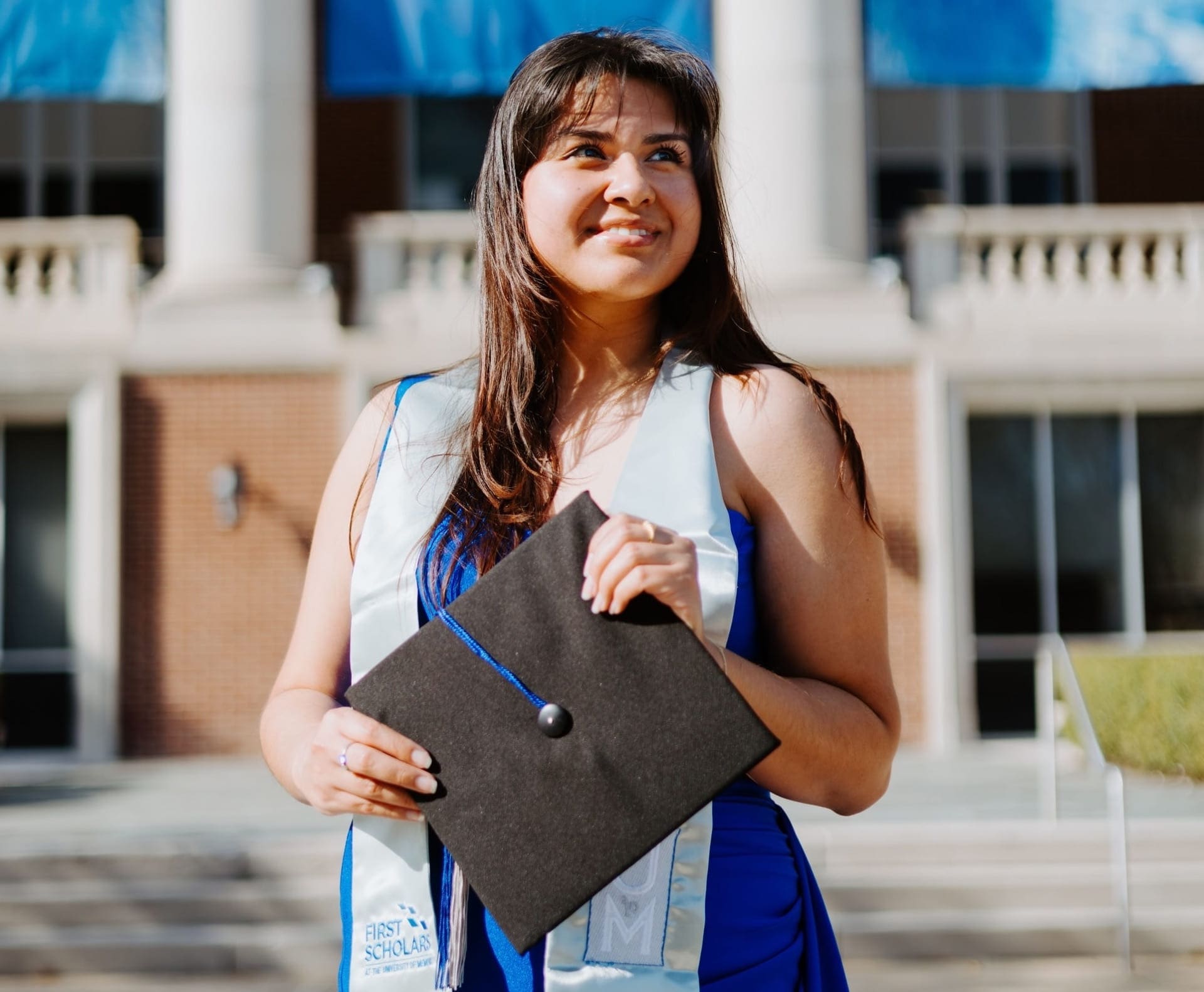
2026 Spring Commencement Spotlight Amairani Solis | Herff College of Engineering
Photos By: Brookelynn Lopez Photography
There was a moment when everything shifted for me, and it didn’t happen in a classroom or at graduation — it happened on a random day at work. The day before, I was sitting there thinking, “What am I going to do after I graduate?” I wasn’t ready to leave. I loved being in school, even with all the stress. The idea of stepping into the real world without a plan felt overwhelming.
So, I did what I’ve learned to do in those moments. I prayed.
The next day, I went back to work, and someone told me I should apply for a position. I went through the interview process, and just like that, I got the offer. I had a job lined up before I even graduated.
I called my parents, and that’s when it hit me: I’m really doing this. I’m about to graduate with an engineering degree, and I’m stepping straight into my career.
When I think about that moment, I see everything that led up to it. My parents choosing to move from Mexico, taking whatever work they could find, moving from city to city just to keep us afloat. At one point, we even lived in my aunt’s garage, though my mom made it feel like a home so beautiful I didn’t realize what it really was.
Now, standing where I am, I realize this was never just about me.
Learning What I Didn’t Know
Growing up, college was always the expectation, but no one really told me how to get there. My parents wanted it for me, but they were learning the system at the same time I was. It wasn’t pressure in the way people might think. It was more like an unspoken understanding: this is the path.
By the time I got to high school, it finally clicked. Grades mattered. Applications mattered. Everything mattered. I worked hard, leaned on my teachers and found my way through the process. I applied to multiple schools and got accepted into all of them.
The University of Memphis wasn’t even my first choice. It was close to home, and my parents really wanted me to stay. At the time, honestly, I didn’t love that decision.
Now, I can say it changed everything.
Part of that was becoming a First Scholar — a program that supported me financially and gave me a foundation I didn’t even realize I needed at the time. But even with that support, stepping into engineering as a first-generation student felt overwhelming.
I’d sit in classes where it seemed like everyone else had a head start. Their parents were engineers. They had connections. They had confidence I didn’t feel yet.
I remember thinking, “How am I supposed to keep up with this?”
Finding My People
That feeling followed me into my early years at Memphis. The imposter syndrome was real, and it didn’t go away overnight. But what changed everything for me was finding the Office of First-Generation Student Success.
At a University where so many students are navigating college for the first time in their families, that kind of support matters more than people realize. For me, it became home.
I started going there early on and eventually I became a peer mentor. That role changed how I saw myself. It wasn’t just about receiving help anymore; it was about giving it.
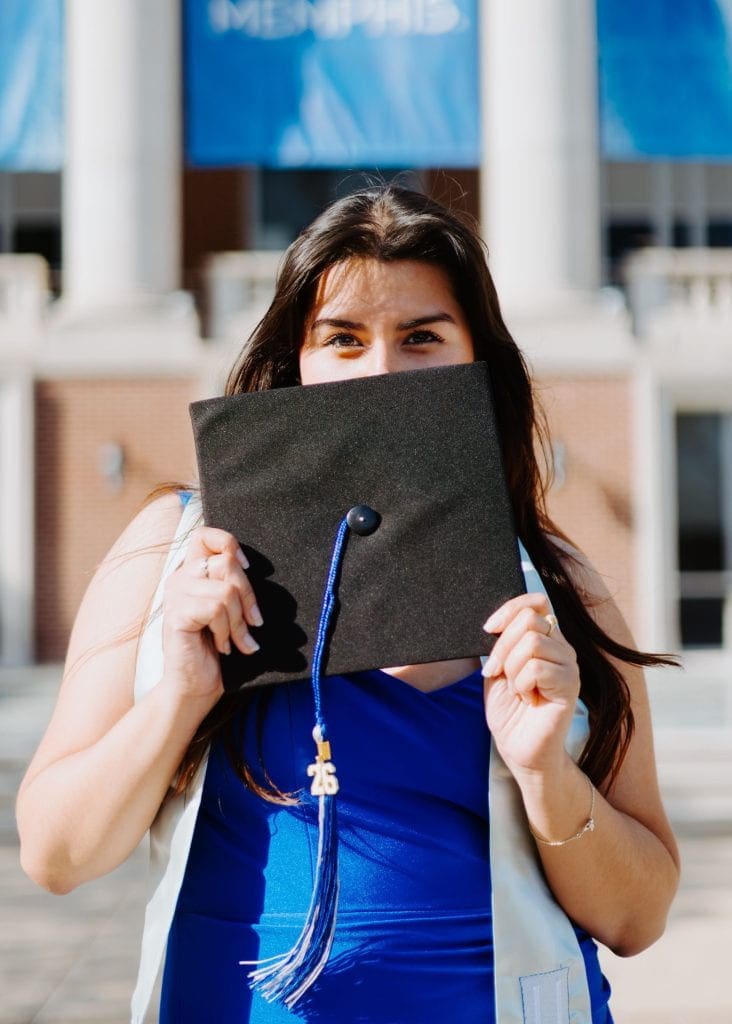
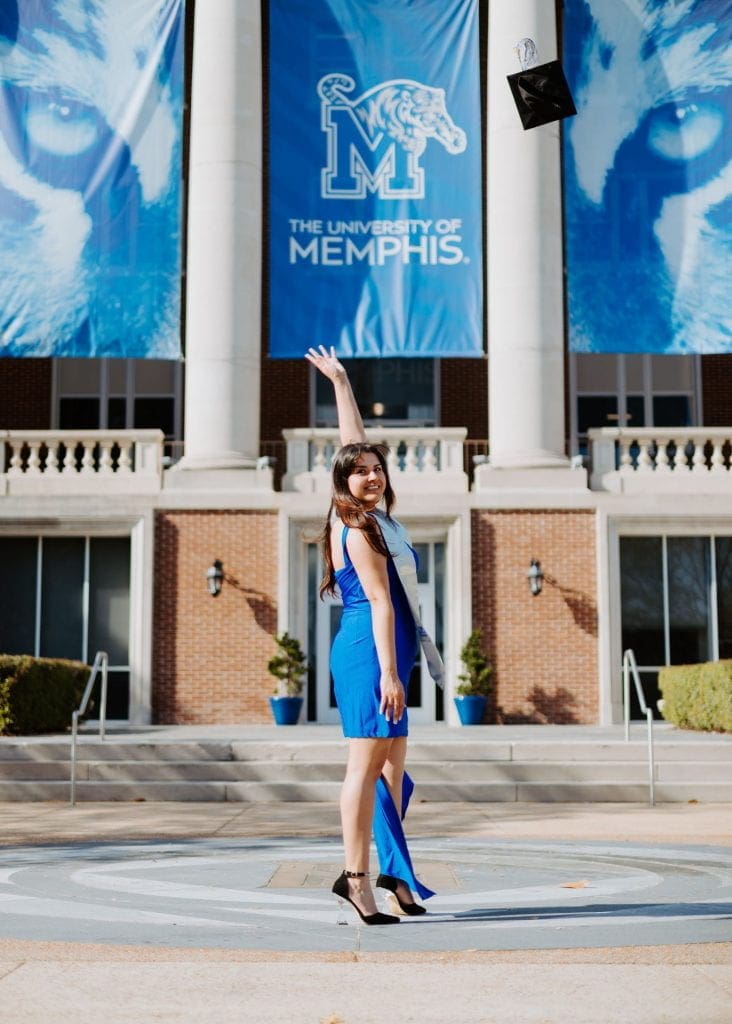
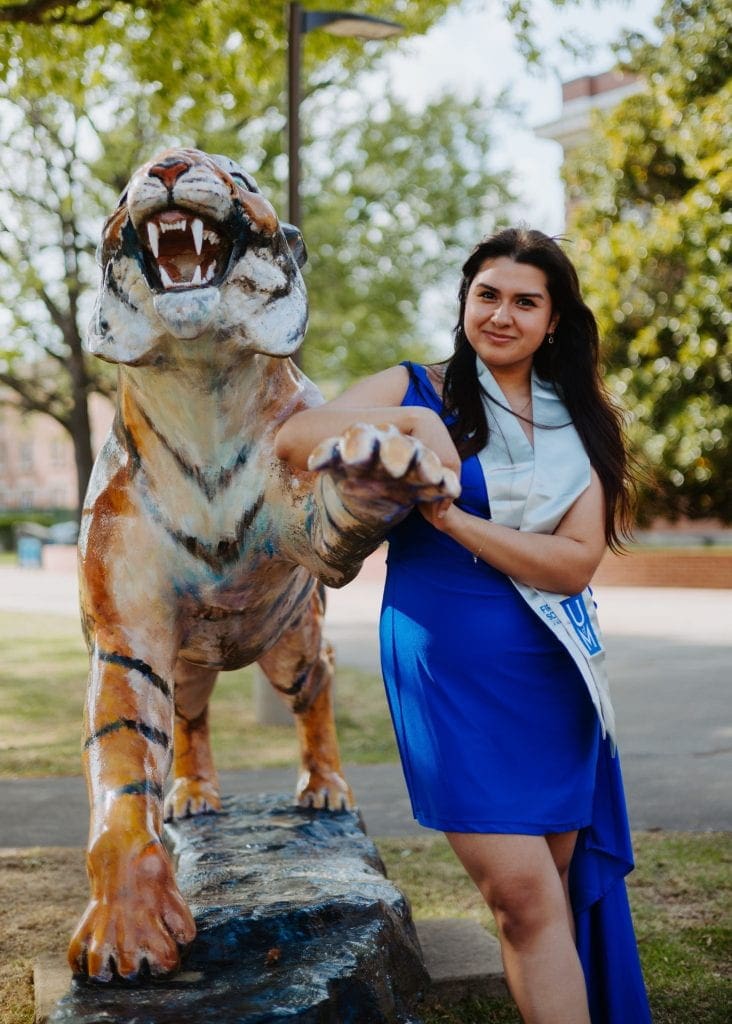
From sitting in meetings to hearing what they were going through and helping them find resources — it showed me how far I had come. One of my mentees even ended up interning at the same place I did after we talked through the process together.
That’s when it hit me: I’m actually making a difference.
The office gave me something much more valuable than resources. It gave me people. Whenever I felt like I couldn’t do something, I had somewhere to go, with people like Jacki Rodriguez and Nikki Taylor Tartt who would sit with me, guide me and remind me I wasn’t alone.
Prayers, Pressure and Persistence
Even with that support, there were still moments when everything felt like too much. Engineering isn’t easy. Being first-generation isn’t easy. Carrying your family’s sacrifices with you is a weight you feel, even when no one says it out loud.
That’s where my faith became my anchor.
I didn’t truly deepen my relationship with God until college. But once I did, it changed how I handled those moments when I didn’t know what to do. My prayers were honest. They were me saying I’m overwhelmed, I’m anxious, I don’t have the answers.
And then choosing to trust anyway.
That didn’t make things magically easy. It was still a process. Year by year, class by class, I had to keep reminding myself that I belong here.
It wasn’t until my senior year that I finally felt it fully. I could walk into a room and not question whether I deserved to be there. I knew I did.
Becoming the First (Again)
Now, I’m stepping into a new chapter as a full-time design engineer, and I know I’m going to be the first again in a lot of ways. At my company, I don’t see many women engineers yet. That could feel intimidating to some, but to me, it feels familiar.
I’ve done this before.
Being first-generation taught me that there will always be things I don’t know. There will always be rooms where I have to figure things out as I go. But instead of seeing that as a disadvantage, I see it as something that pushes me.
I carry my parents’ story with me in everything I do — their sacrifices, their work ethic, the dreams they didn’t get to finish. My mom wanted to be an engineer. In a way, I’m continuing that path for her.
If I could go back and talk to my younger self, I’d tell her something simple: you won’t believe what you’re capable of. Just keep going. Keep working. Keep praying.
Because this isn’t the end of being the first.
It’s just the beginning.