

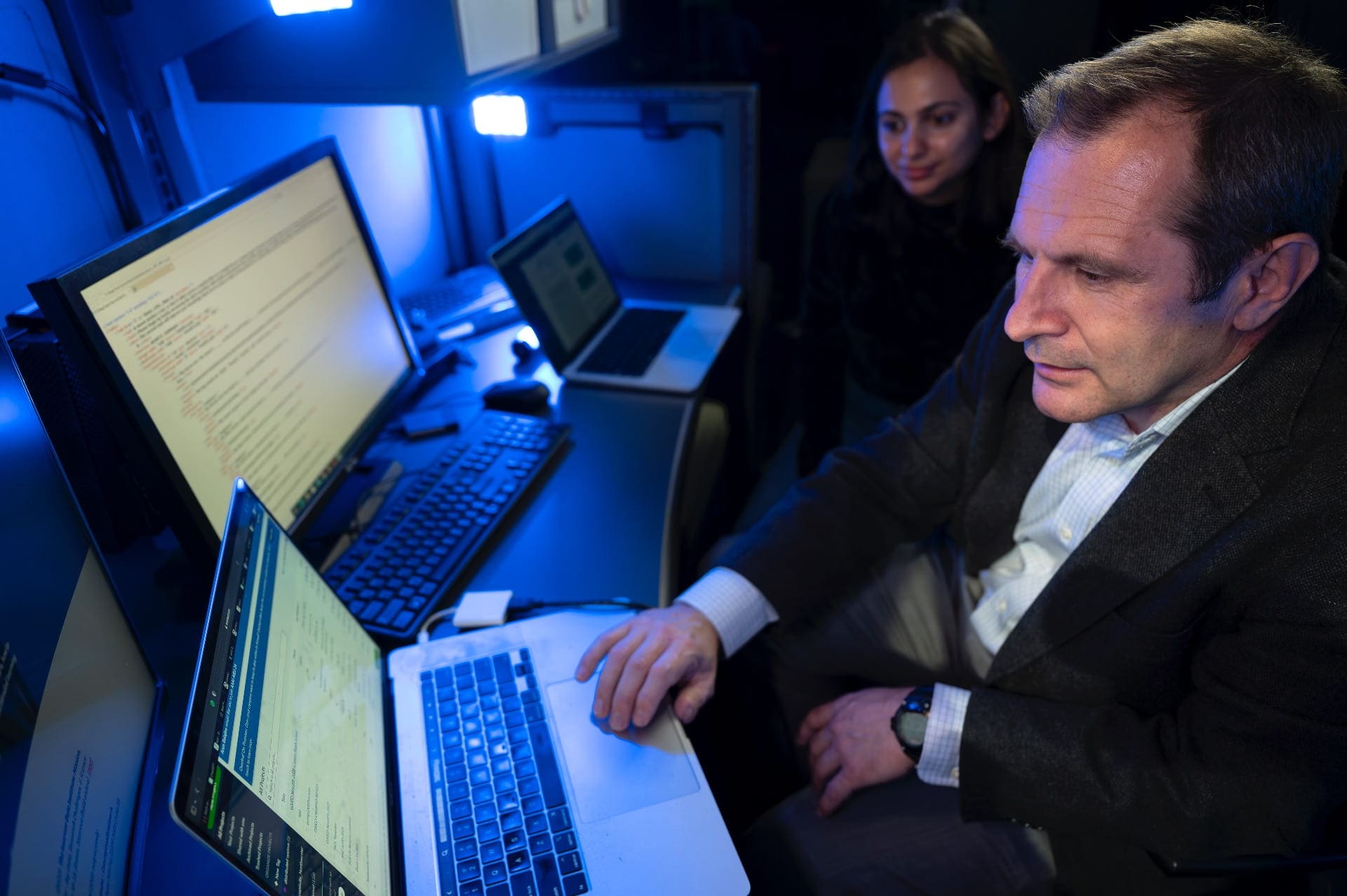
Dr. Vasile Rus, professor in the Department of Computer Science, has been named a 2026-27 Fulbright U.S. Scholar where he will collaborate on research at The National University of Science and Technology POLITEHNICA Bucharest, Romania for the Fall 2026 semester.
“It is a great honor, highlighting the relevance of my research work. The Fulbright Scholar award and the University of Memphis’ support will further enable my research agenda on code comprehension at a time when comprehension is becoming a critical human skill — as much of the draft generation of code or other type of content can be done by AI tools,” Rus said.
“Collaborating with the research group at The National University of Science and Technology POLITEHNICA Bucharest will allow me and my collaborators to explore cross-cultural aspects of code comprehension.”
Rus joined the Department of Computer Science in 2004. He is also a researcher in the UofM’s Institute for Intelligent Systems and director of the Data Science program. His research is focused on the area of language and information processing, broadly construed, and how AI, data science and machine learning can be used to better understand how we learn and to help us better learn. A passion that began when he was a middle school student. “I grew up in an environment where STEM education and careers were highly valued. I was impressed as a middle school student about the potential of computers, of their potential to be told to do so many different things.”
While in Romania as a Fulbright Scholar, Rus’ project will explore a set of foundational research objectives related to how learners and professional programmers comprehend computer programs and contribute to the development and validation of advanced learning technologies such as intelligent tutoring systems (ITSs) for code comprehension.
“Computer Science majors learning programming spend a significant portion of their time reading or reviewing someone else’s code, as do most software professionals. Reading code is the most time-consuming activity during software maintenance, consuming 70% of the total lifecycle cost of a software product. Similarly, non-computer science majors, such as students from education, psychology, biology or economics, often look up existing code, which they must comprehend before modifying it for their own data analytic or other computational purposes. Therefore, offering support to enhance learners’ source code comprehension skills will have lasting positive effects on their academic success and future professional careers,” Rus said.
The project has relevance and implications for today’s increasing reliance on Generative AI tools such as Large Language Models (LLMs), most of which can do the draft generation for professionals and learners, who must then read it in order to comprehend and assess the LLM-generated code — shifting the manual drafting to a higher-level system of oversight and review. In turn allowing professionals to spend more time validating code to make sure it meets system requirements.