

Building Something Meaningful
By: Nia Rincon
When Venki Mandapati (MBA ’20) arrived in Memphis in 2015, he had never been outside of India. He stepped onto campus as an international student with a suitcase full of ambition, a scholarship from the Fogelman College of Business and Economics (FCBE), but no clear vision of entrepreneurship in his future.
Around the same time, Taylor Herndon (BS ’16) was earning a degree in biology, planning a career rooted in science and nature. She never once imagined herself as a business owner.
Today, the lives of these two alumni look very different from what either of them expected.
Mandapati is the co-founder of UpSquad, a technology platform used by universities and nonprofit organizations across the country to support seamless learning and collaboration. Herndon is the founder of Board to Beers, a beloved community-centered board game bar in Memphis designed to bring people together through play, conversation and connection.
Their paths could not have looked more different, yet both alumni are builders of something meaningful that was shaped not by a single defining moment, but by a mindset that evolved over time.
Mandapati calls himself a tinkerer, someone who enjoyed experimenting with ideas and watching people’s lives become easier because of what he created. Growing up, entrepreneurship was not part of his family narrative. Success meant earning a degree and a stable job.
Mandapati returned to the UofM for an MBA and during this time, he became involved with the Crews Center for Entrepreneurship, housed within FCBE.
The Crews Center, founded in 2013 by alumnus entrepreneur Hilliard Crews, and his wife, Harriet, through the Crews Foundation, serves as the University’s hub for entrepreneurial education, innovation and startup development. From Fall 2024 through Summer 2025, the Crews Center engaged with over 2,300 students and faculty. The Center drew participation from 11 colleges and represented 12 sectors of business. And a total of 85% of students attended their events and 73% of graduate students participated in programming.
Since its founding, the Crews Center has supported hundreds of students and alumni through coursework, mentorship, competitions and startup resources, effectively helping launch businesses, nonprofit initiatives and innovative projects.
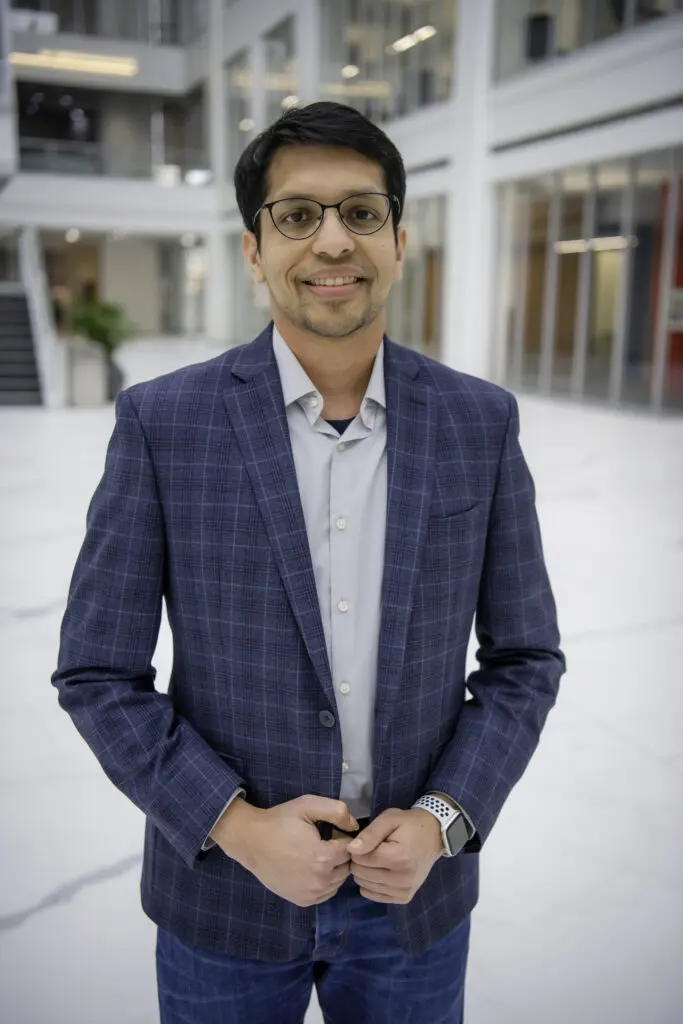
Mandapati’s introduction to the Crews Center was during a weekend hackathon event. He attended out of curiosity, unsure of what to expect. By the end of the weekend, he had won the competition. This experience helped him see that ideas can start small and grow with the support of a network. People were willing to listen and willing to help.
“I thought to myself, wow. There are people out there who would just listen to your ideas, no matter how big or small,” Mandapati recalled. “There is always so much you could do with a little bit of encouragement.”
That realization deepened. Mandapati continued participating in pitch competitions, like Tiger Tank, and began representing the University at entrepreneurial competitions. Each experience reinforced the same lesson: uncertainty was not a weakness — it was part of the process.
At the Crews Center, Mandapati learned to break ideas into solvable problems, identify customer needs and test assumptions before building products. Just as importantly, he realized that risk could be managed.
“There were always people I could go to,” he said. “Even if they didn’t have the answer, they helped me find someone who did.”
For an international student navigating questions of funding, company formation and long-term viability, that guidance mattered.
UpSquad did not follow a straight line. Early funding ran out. The team pivoted repeatedly. When the pandemic hit, they were forced to rethink their entire model almost overnight.
“For the initial steps, we had no clue what we were doing,” Mandapati admitted. “We took it step by step and did whatever we could with our limited resources.”
Those pivots eventually led to a scalable technology platform now used by universities and nonprofit organizations across the country, including programs at the UofM.
“There were always people I could go to, Even if they didn’t have the answer, they helped me find someone who did.”
-Venki Mandapati
Bringing People Together
Herndon’s journey into entrepreneurship followed a very different course.
As a biology major with minors in art and sociology, she envisioned a future working with animals in zoology or marine biology. After graduating, she spent more than a decade at the Memphis Botanic Garden, working in education and outreach by building programs and serving her community.
“I never imagined that I would own a business,” she said. Herndon began her studies at the UofM before the Crews Center was established, meaning her entrepreneurial education would take shape later and largely outside the classroom.
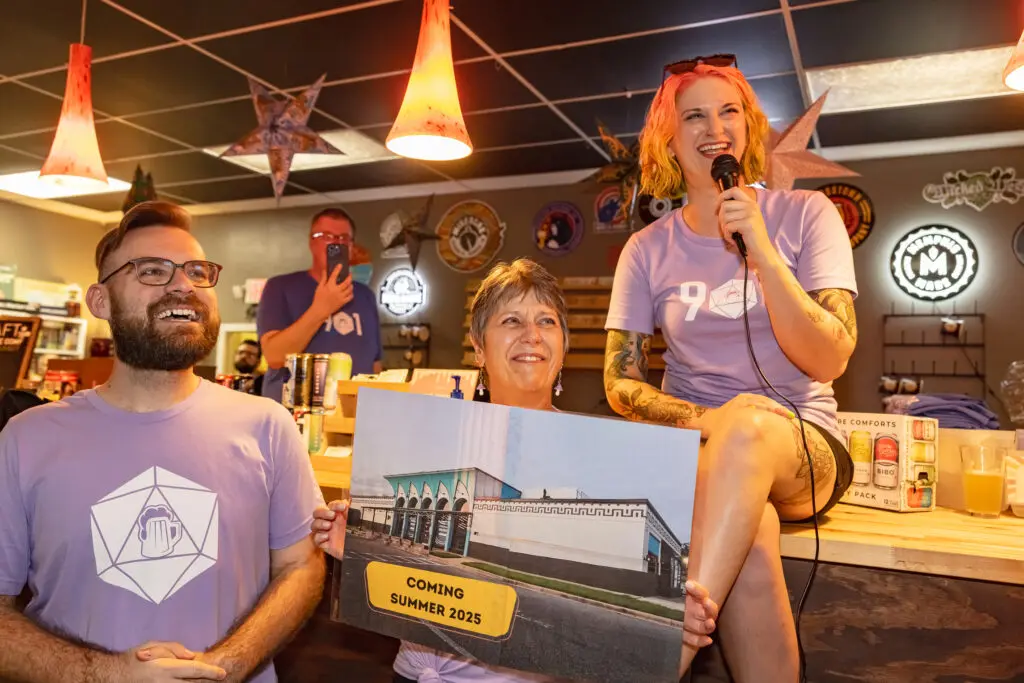
In 2015, her father passed away unexpectedly from cancer. The loss brought clarity and urgency, forcing her to reconsider how she wanted to spend her time and energy. She and her husband turned their shared love of board games into something more than a hobby. They became a way to bring people together, spark joy and foster connections during difficult moments.
“You never know how much time you have on this earth,” Herndon said. “So, it made me make a complete career change.”
Herndon didn’t have formal business training, startup capital or a safety net. What she did have was a community willing to support her vision and who rallied to fully crowdfund her initial startup costs.
“It’s a really interesting option if you want to go into business and don’t have the funds,” she said. “If there’s a need in your community, crowdfunding can be a great option, but it requires a lot of marketing and learning the ins and outs as you go.”
She taught herself the mechanics of running a company through online resources, networking and a healthy amount of trial and error.
Before their expanded brick-and-mortar location at Poplar Plaza, Board to Beers operated out of a smaller space and even from a mobile board game trailer as a traveling, physical space designed to create connection. Step-by-step, Herndon’s vision became a reality.
Herndon opened Board to Beers in August 2020, during the global pandemic. In five years, the business has never operated in the green. She has faced rising costs, delays and constant uncertainty. And yet, she considers herself successful.
For her, success is not measured in profit margins. It is measured in people.
“Board to Beers is meant to be that third space,” she said. “We are a safe place. We don’t turn anyone away.”
Over time, both alumni have redefined what success means to them.
For Mandapati, success now means helping others navigate the uncertainty he once faced. “The biggest lesson I learned is that no one is self-made,” he said. “You need people to be able to get where you want to go.”
Herdon tells the story of a customer who came in every day during the pandemic after moving to Memphis alone. Years later, he returned with his wife and child, proud to show them the place that once served as his community. “That’s what we’re here for,” Herndon said.
Closing the Loop
Today, both alumni give back in ways that close the loop between education and impact through mentorship, training programs, sharing real-world perspectives and guiding students and teams
as they take their first steps into entrepreneurship.
Entrepreneurship, as these alumni show, is not a moment. It’s not a major or a title. It’s a way of engaging with the world one question, one connection and one brave step at a time.
Learn More about the Crews Center for Entrepreneurship by visiting: https://www.memphis.edu/crews/opportunities/